Josephine Norton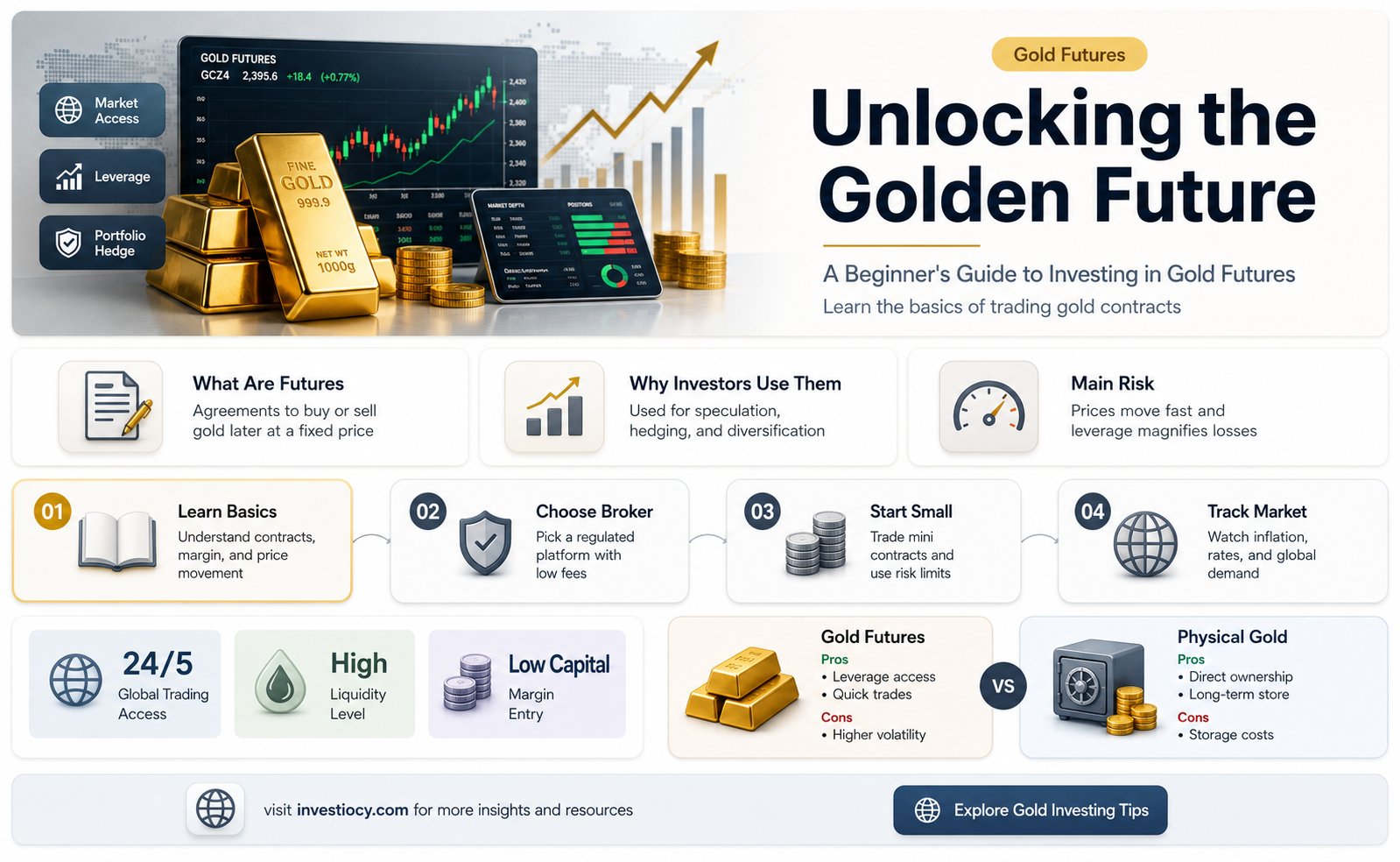
Investing in gold futures can be a strategic move for those looking to diversify their portfolios and hedge against inflation or market volatility. Gold futures allow investors to speculate on the future price of gold without the need to physically store the metal. This investment vehicle is traded on commodities exchanges and requires a thorough understanding of market dynamics, risk management, and trading strategies. Before diving into gold futures, it's essential to research and understand the factors influencing gold prices, such as economic indicators, geopolitical events, and supply and demand. Additionally, investors should familiarize themselves with the mechanics of futures contracts, including margin requirements, contract specifications, and expiration dates. A well-informed approach, combined with a disciplined trading strategy, can help investors navigate the complexities of the gold futures market.
Explore related products


What You'll Learn
- Understanding Gold Futures: Learn about gold futures contracts, their specifications, and how they differ from other gold investments
- Market Analysis: Study the factors influencing gold prices, including economic indicators, geopolitical events, and market sentiment
- Trading Strategies: Explore various strategies for trading gold futures, such as trend following, scalping, and hedging
- Risk Management: Understand the risks associated with gold futures trading and implement appropriate risk management techniques
- Broker Selection: Choose a reputable broker that offers gold futures trading, considering factors like commissions, leverage, and customer support

Understanding Gold Futures: Learn about gold futures contracts, their specifications, and how they differ from other gold investments
Gold futures contracts are a type of derivative instrument that allows investors to speculate on the future price of gold. These contracts are standardized agreements between two parties, where one party agrees to buy gold at a predetermined price and quantity on a specific date in the future, while the other party agrees to sell. Gold futures are traded on regulated exchanges, such as the Chicago Mercantile Exchange (CME) and the Intercontinental Exchange (ICE), and are subject to strict rules and regulations.
One of the key specifications of gold futures contracts is the contract size, which typically represents 100 troy ounces of gold. The contract price is quoted in dollars per troy ounce, and the minimum price movement, or tick size, is usually $0.10 per ounce. Gold futures contracts also have expiration dates, which are typically monthly, and the last trading day for a contract is usually the third Friday of the month preceding expiration.
Gold futures differ from other gold investments in several ways. Unlike physical gold, which requires storage and insurance, gold futures do not involve the actual delivery of gold. Instead, investors settle their contracts in cash, based on the difference between the contract price and the market price of gold at expiration. This makes gold futures a more liquid investment, as they can be easily bought and sold on the exchange.
Another key difference is that gold futures allow investors to leverage their investment, meaning they can control a larger amount of gold with a smaller amount of capital. This is because investors only need to deposit a margin, or a percentage of the contract value, to enter into a futures contract. However, this also increases the risk, as investors can lose more than their initial investment if the market moves against them.
Investors should also be aware of the potential for contango and backwardation in the gold futures market. Contango occurs when the price of a futures contract is higher than the current spot price of gold, while backwardation occurs when the futures price is lower. These market conditions can affect the profitability of gold futures investments and should be carefully considered before entering into a contract.
In conclusion, gold futures contracts offer investors a unique way to speculate on the future price of gold. They provide a liquid, leveraged investment opportunity that differs from physical gold and other gold investments. However, investors should be aware of the specific specifications and risks associated with gold futures before incorporating them into their investment strategy.
Diversify Your Portfolio: A Beginner's Guide to Gold and Silver ETFs
You may want to see also
Explore related products


Market Analysis: Study the factors influencing gold prices, including economic indicators, geopolitical events, and market sentiment
Gold prices are influenced by a multitude of factors, making market analysis a crucial component of successful gold futures investment. Economic indicators such as inflation rates, interest rates, and currency values play a significant role in determining gold prices. For instance, during periods of high inflation, gold is often seen as a safe-haven asset, leading to increased demand and higher prices. Conversely, when interest rates rise, the opportunity cost of holding gold increases, potentially reducing its appeal and driving prices down.
Geopolitical events also have a profound impact on gold prices. Political instability, wars, and global tensions can lead to increased demand for gold as investors seek to protect their wealth from potential economic disruptions. For example, during the COVID-19 pandemic, gold prices surged as investors flocked to safe-haven assets amidst global economic uncertainty.
Market sentiment, which refers to the overall attitude of investors towards a particular asset, is another key factor influencing gold prices. Bullish sentiment, characterized by optimism and confidence in the asset's future performance, can drive prices higher, while bearish sentiment can lead to price declines. Technical analysis tools, such as moving averages and relative strength indices, can be used to gauge market sentiment and identify potential trends in gold prices.
In addition to these factors, supply and demand dynamics also play a role in determining gold prices. Changes in gold production, recycling rates, and central bank reserves can impact the supply side, while shifts in consumer demand, particularly in emerging markets, can influence the demand side.
To conduct a comprehensive market analysis, investors should consider a wide range of economic indicators, geopolitical events, and market sentiment tools. This can involve monitoring news releases, analyzing economic data, and using technical analysis to identify trends and patterns in gold prices. By understanding the various factors that influence gold prices, investors can make more informed decisions when investing in gold futures.
Smart Gold Investment Strategies on Robinhood for Beginners
You may want to see also
Explore related products



Trading Strategies: Explore various strategies for trading gold futures, such as trend following, scalping, and hedging
Trend following is a popular strategy among gold futures traders, involving the identification and following of market trends. This approach relies on technical analysis tools such as moving averages and trend lines to determine the direction of the market. Traders enter positions in the direction of the trend and exit when the trend reverses. For instance, if the 50-day moving average crosses above the 200-day moving average, it may signal a bullish trend, prompting traders to go long on gold futures.
Scalping is another strategy that involves making multiple small trades throughout the day, aiming to profit from short-term price movements. Scalpers typically use lower time frames, such as 1-minute or 5-minute charts, and focus on high-liquidity periods when the market is most active. They may use technical indicators like the Relative Strength Index (RSI) or Bollinger Bands to identify overbought or oversold conditions, entering trades to capitalize on these short-term imbalances.
Hedging is a risk management strategy used by traders to protect their positions from adverse market movements. In the context of gold futures, hedging can involve taking a position in a related asset, such as silver futures or a gold mining stock, to offset potential losses in the primary position. For example, a trader holding a long position in gold futures may short sell silver futures to hedge against a potential decline in precious metal prices.
Each of these strategies has its own advantages and disadvantages, and traders often combine them or adapt them to suit their individual trading styles. Successful implementation requires a deep understanding of market dynamics, technical analysis, and risk management principles. Additionally, traders must be aware of the unique characteristics of the gold futures market, such as its high volatility and the impact of geopolitical events on price movements.
In conclusion, exploring various trading strategies for gold futures can help traders develop a more comprehensive approach to investing in this market. By understanding the intricacies of trend following, scalping, and hedging, traders can better navigate the complexities of the gold futures market and potentially improve their overall trading performance.
Shining Prospects: Why Silver Outperforms Gold as a Smart Investment Choice
You may want to see also
Explore related products

$70.77 $70.77


Risk Management: Understand the risks associated with gold futures trading and implement appropriate risk management techniques
Gold futures trading, while potentially lucrative, is fraught with risks that can quickly erode an investor's capital. One of the primary risks is market volatility, as gold prices can fluctuate dramatically in response to geopolitical events, economic data, and changes in investor sentiment. To mitigate this risk, investors should employ a diversified investment strategy, allocating only a portion of their portfolio to gold futures.
Another significant risk is the potential for large margin calls, which can occur when the market moves against an investor's position. To manage this risk, it's essential to maintain a sufficient margin buffer and to set stop-loss orders to limit potential losses. Additionally, investors should be aware of the risks associated with counterparty default, as the failure of a broker or exchange can result in the loss of invested funds. To minimize this risk, investors should choose reputable brokers and exchanges with strong financial backing.
Investors should also be mindful of the risks associated with leverage, as gold futures contracts are typically highly leveraged. While leverage can amplify potential gains, it can also magnify losses, making it essential to use leverage judiciously and to maintain a disciplined approach to trading. To further manage risk, investors should consider using options strategies, such as buying put options to protect against downside risk or selling call options to generate income.
In addition to these risk management techniques, investors should also stay informed about market developments and be prepared to adjust their positions as needed. This may involve monitoring economic indicators, such as inflation rates and interest rates, as well as staying abreast of geopolitical events that could impact gold prices. By taking a proactive approach to risk management and staying informed about market conditions, investors can increase their chances of success in gold futures trading.
Secure Your Future: A Guide to Investing in Gold IRAs
You may want to see also
Explore related products


Broker Selection: Choose a reputable broker that offers gold futures trading, considering factors like commissions, leverage, and customer support
Selecting a reputable broker is paramount when venturing into gold futures trading. A broker acts as your gateway to the market, and their reliability, service quality, and fee structure can significantly impact your trading experience and outcomes. Here are key factors to consider:
Commissions and Fees: Brokers charge commissions for executing trades, which can vary widely. Some brokers offer flat fees per trade, while others charge a percentage of the trade value. Additionally, consider other fees such as account maintenance, withdrawal, and inactivity fees. These costs can add up, so it's essential to choose a broker with a fee structure that aligns with your trading frequency and volume.
Leverage: Leverage allows you to control a larger position with a smaller amount of capital. While this can amplify your potential profits, it also increases your risk. Brokers offer different leverage ratios, typically ranging from 1:10 to 1:100 or more. Choose a broker that provides the leverage you're comfortable with, considering your risk tolerance and trading strategy.
Customer Support: Reliable customer support is crucial, especially when dealing with complex financial instruments like gold futures. Look for brokers that offer 24/7 support through multiple channels such as phone, email, and live chat. Test their support responsiveness and knowledge before committing to ensure you'll receive the assistance you need when you need it.
Regulatory Compliance: Ensure the broker is regulated by a reputable financial authority, such as the Commodity Futures Trading Commission (CFTC) in the United States or the Financial Conduct Authority (FCA) in the United Kingdom. Regulatory oversight helps protect your funds and ensures the broker adheres to strict standards of conduct.
Trading Platform: The broker's trading platform should be user-friendly, reliable, and offer the tools and features you need to analyze the market and execute trades efficiently. Look for platforms that provide real-time market data, advanced charting capabilities, and mobile trading options if you plan to trade on the go.
Reputation and Reviews: Research the broker's reputation online by reading reviews from other traders. Check for any complaints or negative feedback, and consider how the broker responds to these issues. A broker with a strong reputation and positive reviews is more likely to provide a satisfactory trading experience.
In conclusion, choosing the right broker for gold futures trading involves careful consideration of various factors. By evaluating brokers based on commissions, leverage, customer support, regulatory compliance, trading platform, and reputation, you can find a reliable partner that meets your trading needs and helps you achieve your investment goals.
Timeless Elegance: The Enduring Value of Gold Jewelry Investments
You may want to see also
Frequently asked questions
Gold futures are financial contracts that allow investors to buy or sell gold at a predetermined price on a specific future date. These contracts are standardized in terms of quantity and quality of gold, and they are traded on commodities exchanges. Investors can speculate on the future price of gold without physically holding the metal.
To invest in gold futures, one needs to open a brokerage account with a firm that offers futures trading. After completing the necessary paperwork and funding the account, the investor can start buying or selling gold futures contracts. It's essential to understand the risks involved and have a clear investment strategy.
Investing in gold futures can offer several benefits, including the potential for high returns, diversification of investment portfolios, and a hedge against inflation and economic uncertainty. Gold is often considered a safe-haven asset, and its price can increase during times of market volatility.
Investing in gold futures comes with various risks, such as price volatility, leverage risks, and the possibility of losing more than the initial investment. The gold market can be highly speculative, and prices can fluctuate rapidly based on market conditions and geopolitical events. It's crucial for investors to be well-informed and manage their risks effectively.