Faith Morrow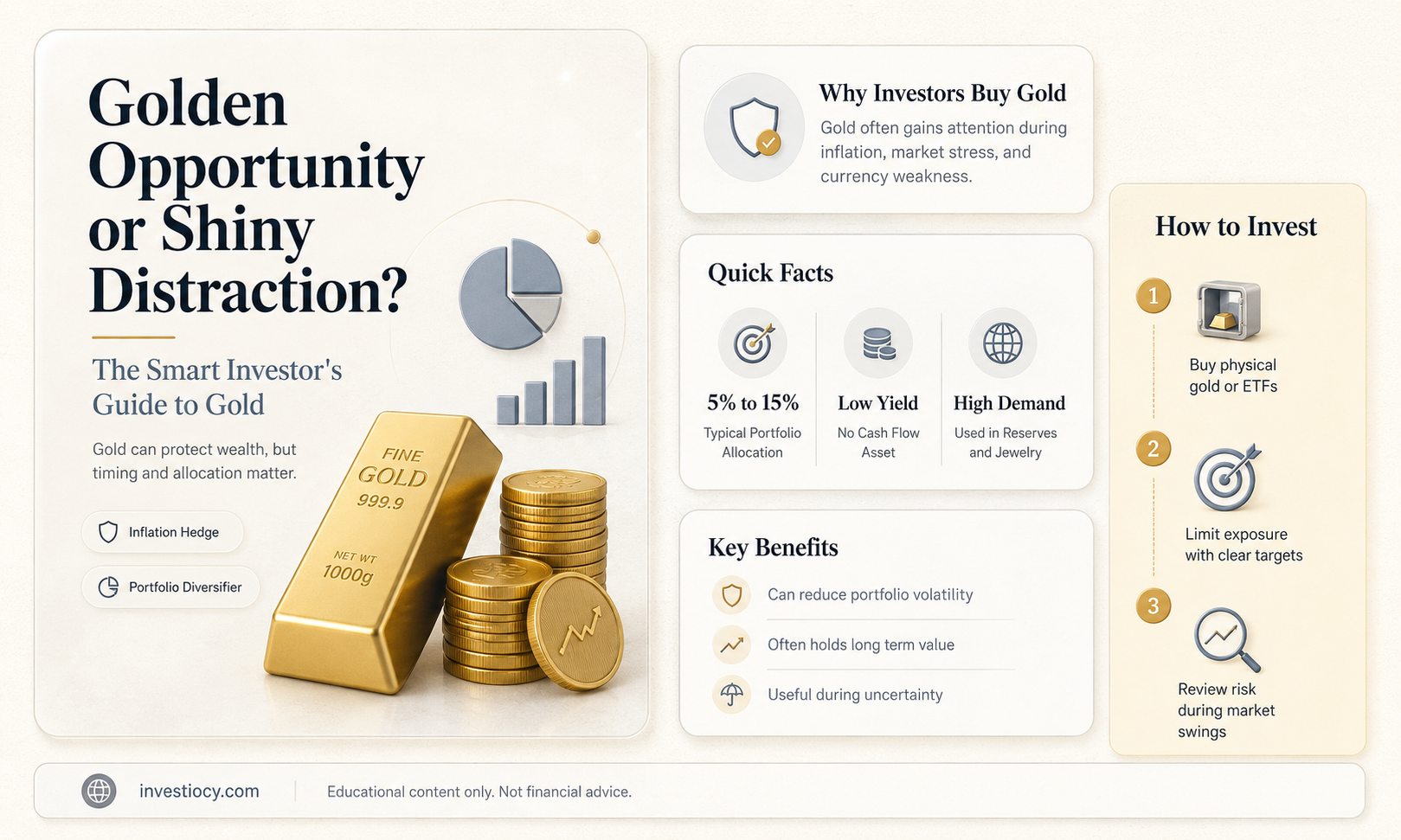
Investing in gold has long been considered a safe-haven strategy, particularly during times of economic uncertainty. Gold is often viewed as a tangible asset that can hedge against inflation and market volatility. Its value tends to increase when other investments, like stocks and bonds, decline. However, the decision to invest in gold should be made after careful consideration of various factors, including market conditions, personal financial goals, and risk tolerance. While gold can provide stability, it also comes with its own set of risks and may not always yield the highest returns compared to other investment options.
Explore related products


What You'll Learn
- Historical Performance: Analyze gold's price trends and returns over time to assess its investment potential
- Risk Management: Evaluate how gold can hedge against inflation, market volatility, and economic downturns
- Portfolio Diversification: Consider gold's role in a balanced investment portfolio to spread risk and enhance returns
- Market Demand: Examine factors influencing gold demand, such as jewelry, technology, and central bank reserves
- Storage and Security: Weigh the costs and benefits of storing gold physically versus investing in gold ETFs or mining stocks

Historical Performance: Analyze gold's price trends and returns over time to assess its investment potential
Gold has historically been a sought-after investment, often perceived as a safe haven during economic turmoil. To assess its investment potential, it's crucial to examine its price trends and returns over time. A longitudinal analysis reveals that gold prices have experienced significant fluctuations, influenced by various geopolitical and economic factors. For instance, during the 2008 financial crisis, gold prices surged as investors sought refuge from the volatile stock market. Conversely, periods of economic stability have seen gold prices decline, as investors shifted their focus to higher-yielding assets.
One approach to analyzing gold's historical performance is to study its correlation with other asset classes. Gold has traditionally exhibited a negative correlation with the stock market, meaning that when stocks fall, gold prices tend to rise. This inverse relationship can be beneficial for investors looking to diversify their portfolios and mitigate risk. However, it's essential to note that past performance is not always indicative of future results, and gold's behavior can be influenced by a myriad of factors, including changes in monetary policy, inflation rates, and global events.
Investors interested in gold should also consider the different ways to invest in this precious metal. Physical gold, such as coins and bars, offers a tangible asset that can be stored securely. However, it comes with storage costs and the risk of theft. Gold ETFs and mutual funds provide a more liquid and cost-effective option, allowing investors to gain exposure to gold prices without the need for physical storage. Additionally, gold mining stocks can offer a leveraged play on gold prices, as the value of these stocks is often more sensitive to changes in gold prices than the metal itself.
When evaluating gold's investment potential, it's important to consider the opportunity cost. Gold does not generate income or dividends, unlike stocks or bonds. Therefore, investors must rely on capital appreciation to realize returns. This can be a double-edged sword, as gold's price volatility can lead to significant gains or losses. Furthermore, gold's lack of income generation means that it may not be suitable for investors seeking regular cash flow or those in retirement.
In conclusion, gold's historical performance suggests that it can be a valuable addition to a diversified investment portfolio, particularly during times of economic uncertainty. However, investors must be aware of the risks and considerations associated with gold investment, including its volatility, lack of income generation, and the various ways to gain exposure to this precious metal. By carefully analyzing gold's price trends and returns over time, investors can make informed decisions about whether gold is a smart investment for their specific financial goals and risk tolerance.
Shining Prospects: Why Silver Outperforms Gold as a Smart Investment Choice
You may want to see also
Explore related products




Risk Management: Evaluate how gold can hedge against inflation, market volatility, and economic downturns
Gold has historically been viewed as a safe-haven asset, and its ability to hedge against inflation, market volatility, and economic downturns is a key reason why investors consider it a smart addition to their portfolios. During periods of high inflation, the purchasing power of paper currencies decreases, but the value of gold tends to rise, making it an effective hedge. For instance, during the 1970s oil crisis, gold prices soared as inflation rates climbed, demonstrating its protective qualities.
Market volatility can be another compelling reason to invest in gold. When stock markets experience sharp declines, gold often moves in the opposite direction, providing a buffer against losses in equity portfolios. This inverse relationship can help investors mitigate risk and maintain portfolio stability during turbulent times.
Economic downturns also highlight gold's resilience. During the 2008 financial crisis, gold prices initially fell but quickly rebounded, outperforming many other assets. This performance underscores gold's potential to preserve wealth even when economic conditions deteriorate.
However, it's important to note that gold is not without risks. Its price can be volatile, and it doesn't generate income like stocks or bonds. Additionally, gold's performance can be influenced by factors such as central bank policies, geopolitical events, and changes in investor sentiment.
To effectively use gold as a hedge, investors should consider diversifying their portfolios by allocating a portion to gold bullion, gold ETFs, or gold mining stocks. This diversification can help spread risk and enhance overall portfolio resilience.
In conclusion, gold's historical performance as a hedge against inflation, market volatility, and economic downturns makes it a valuable asset for risk management. While it's not a panacea and comes with its own set of risks, incorporating gold into a diversified investment strategy can provide a protective buffer during uncertain times.
Unveiling the Truth: Is Noble Gold Investments Legitimate?
You may want to see also
Explore related products


Portfolio Diversification: Consider gold's role in a balanced investment portfolio to spread risk and enhance returns
Gold has long been considered a safe-haven asset, and its inclusion in a diversified investment portfolio can serve multiple strategic purposes. By allocating a portion of your investments to gold, you can potentially reduce the overall risk of your portfolio. This is because gold tends to have a low correlation with other asset classes, such as stocks and bonds, meaning that when these assets experience volatility, gold often moves in the opposite direction. This inverse relationship can help to cushion the impact of market downturns on your portfolio.
In addition to risk mitigation, gold can also play a role in enhancing returns. While gold does not generate dividends or interest, its price can appreciate over time, providing capital gains to investors. Furthermore, gold is a tangible asset that can serve as a hedge against inflation and currency devaluation. As central banks around the world continue to implement accommodative monetary policies, the risk of inflation remains a concern for many investors. By including gold in your portfolio, you can gain exposure to an asset that has historically maintained its purchasing power over long periods.
When considering gold's role in a balanced investment portfolio, it's important to determine the appropriate allocation. Financial advisors often recommend that gold make up no more than 5-10% of an investor's total portfolio. This allocation can provide a meaningful diversification benefit without overly impacting the portfolio's overall performance. Investors can gain exposure to gold through various means, including physical bullion, gold ETFs, or gold mining stocks. Each of these options has its own unique characteristics and risk profile, so it's essential to carefully evaluate which method best aligns with your investment goals and risk tolerance.
In conclusion, incorporating gold into a diversified investment portfolio can be a smart strategy for spreading risk and enhancing returns. By understanding gold's unique properties and determining the appropriate allocation, investors can potentially improve the resilience and performance of their portfolios. As with any investment decision, it's crucial to conduct thorough research and consult with a financial advisor to ensure that gold aligns with your specific financial objectives and risk appetite.
Smart Gold Investment Strategies on Robinhood for Beginners
You may want to see also
Explore related products

![Gold Diggers: The Secret of Bear Mountain [DVD]](https://m.media-amazon.com/images/I/81ColQm5fgL._AC_UL320_.jpg)



Market Demand: Examine factors influencing gold demand, such as jewelry, technology, and central bank reserves
Gold demand is multifaceted, driven by various sectors that contribute to its market value. One of the primary factors influencing gold demand is the jewelry industry. Gold has been a preferred material for jewelry making for centuries due to its durability, malleability, and aesthetic appeal. The demand for gold jewelry is particularly high in countries like India, China, and the United States, where it is not only a fashion statement but also a cultural and traditional symbol. Seasonal fluctuations, such as increased demand during wedding seasons and festivals, further impact the gold market.
Another significant factor affecting gold demand is its use in technology. Gold is an excellent conductor of electricity and is used in the manufacturing of various electronic components, including computer parts, smartphones, and other high-tech devices. As technology continues to advance and the demand for electronic devices grows, so does the need for gold in the tech industry. This industrial demand provides a stable and consistent market for gold, contributing to its overall value.
Central banks also play a crucial role in gold demand. Gold is considered a safe-haven asset, and central banks around the world hold gold reserves as part of their foreign exchange reserves. These reserves act as a buffer against economic uncertainties and currency fluctuations. During times of economic instability, central banks may increase their gold holdings, driving up demand and prices. Additionally, some central banks issue gold-backed bonds or allow gold to be used as collateral, further integrating gold into the global financial system.
In conclusion, the demand for gold is influenced by a diverse range of factors, including the jewelry industry, technological applications, and central bank reserves. Understanding these factors is essential for investors looking to make informed decisions about gold investments. By analyzing trends in these sectors, investors can gain insights into potential market movements and make strategic investment choices.
Diversify Your Portfolio: A Beginner's Guide to Gold and Silver ETFs
You may want to see also
Explore related products



Storage and Security: Weigh the costs and benefits of storing gold physically versus investing in gold ETFs or mining stocks
Storing gold physically can provide a sense of security and direct ownership, but it also comes with significant costs and risks. Investors must consider the expense of purchasing a safe or renting a safety deposit box, as well as the potential for theft or loss. Additionally, physical gold is subject to market fluctuations and may not be as easily liquidated as other forms of investment.
On the other hand, investing in gold ETFs or mining stocks offers a more convenient and cost-effective way to gain exposure to the gold market. ETFs track the price of gold and can be easily bought and sold on stock exchanges, while mining stocks offer the potential for higher returns through dividends and capital appreciation. However, these investments are subject to market volatility and may not provide the same level of security as physical gold.
When deciding between physical gold and gold ETFs or mining stocks, investors should consider their risk tolerance, investment goals, and time horizon. Those seeking a safe-haven asset with direct ownership may prefer physical gold, while those looking for a more liquid and potentially higher-returning investment may opt for ETFs or mining stocks.
Ultimately, the decision to invest in gold, whether physically or through ETFs and mining stocks, should be based on a thorough understanding of the costs, benefits, and risks associated with each option. Investors should carefully weigh their choices and consult with a financial advisor before making any investment decisions.
Securing Your Future: The Timeless Value of Gold Investments
You may want to see also
Frequently asked questions
Investing in gold can be a smart move as it often serves as a safe-haven asset during economic uncertainty and inflation. It can help diversify your portfolio and protect wealth.
While gold is considered a stable investment, it does carry risks such as market volatility, storage costs, and the lack of dividends or interest. It's important to balance gold investments with other assets.
There are several ways to invest in gold, including buying physical gold (bars, coins), investing in gold ETFs or mutual funds, purchasing gold stocks, or trading gold futures and options. Each method has its own advantages and considerations.