Clark Galvan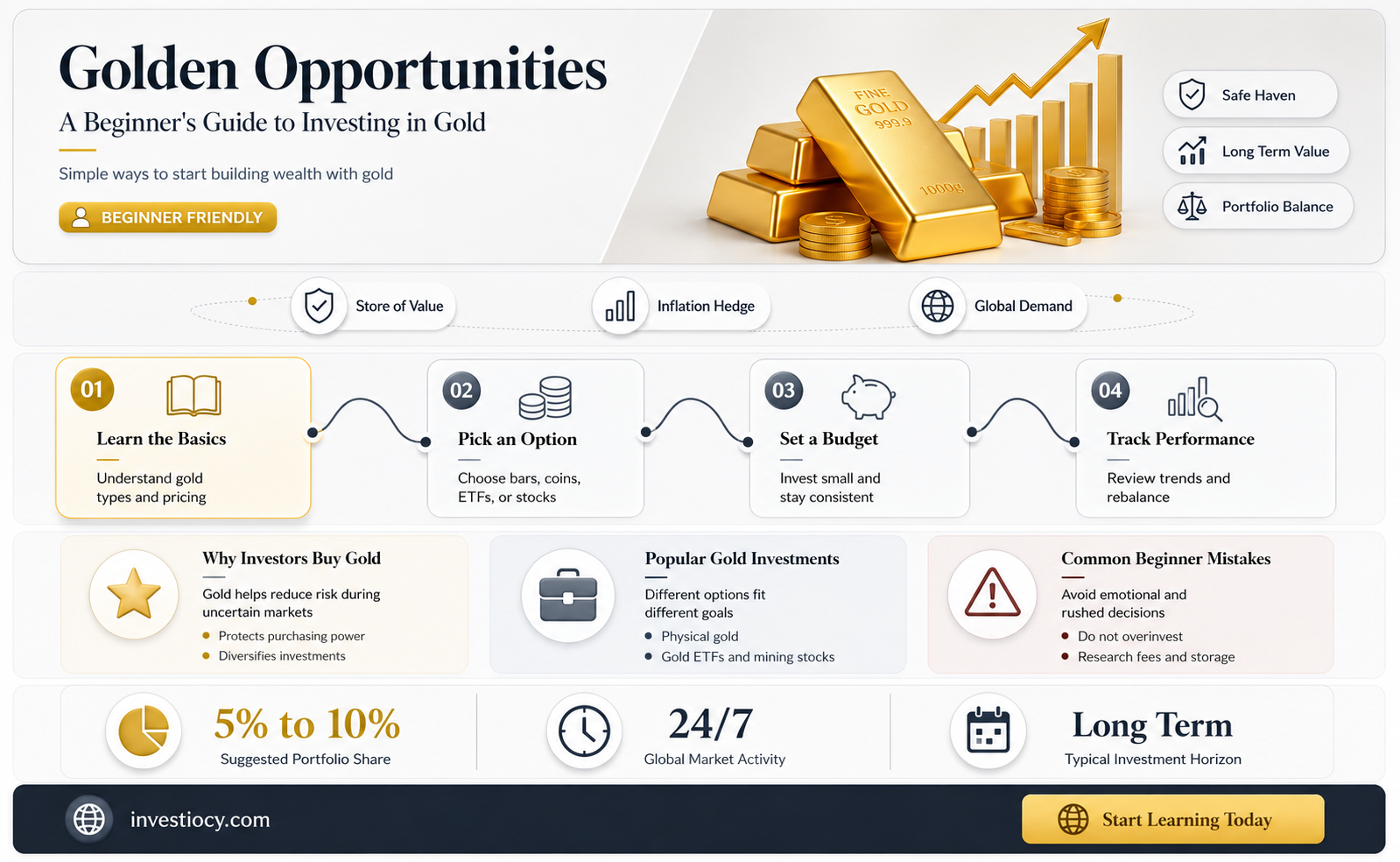
Investing in gold can be a wise decision for beginners looking to diversify their portfolio and protect their wealth. Gold has historically been a stable investment, often performing well during economic downturns. For those new to investing in gold, it's important to understand the different ways to invest, such as buying physical gold, investing in gold ETFs, or purchasing gold mining stocks. Each method has its own advantages and risks, and beginners should carefully consider their options before making a decision. Additionally, it's crucial to research and understand the current market conditions and trends in gold prices to make informed investment choices.
Explore related products


What You'll Learn
- Understanding Gold Investment: Learn about gold's role in portfolios, its benefits, and potential risks
- Physical vs. Digital Gold: Decide between investing in physical gold (bars, coins) or digital gold (ETFs, mutual funds)
- Gold Market Analysis: Research current market trends, prices, and factors influencing gold's value
- Choosing a Gold Dealer: Find a reputable dealer for purchasing physical gold, ensuring authenticity and fair pricing
- Storage and Security: Determine secure storage options for physical gold, considering home safes or professional vaults

Understanding Gold Investment: Learn about gold's role in portfolios, its benefits, and potential risks
Gold has long been considered a safe-haven asset, playing a unique role in investment portfolios. Its primary function is to act as a hedge against inflation and economic uncertainty. When stock markets falter, gold prices often rise, providing a counterbalance to equity losses. This inverse relationship makes gold an attractive diversification tool for investors seeking to mitigate risk.
One of the key benefits of investing in gold is its liquidity. Unlike real estate or other tangible assets, gold can be easily bought and sold in various forms, such as bars, coins, or exchange-traded funds (ETFs). This flexibility allows investors to quickly adjust their holdings in response to market conditions. Additionally, gold is a finite resource, which can drive up its value over time as demand increases and supply diminishes.
However, gold investment is not without its potential risks. One significant drawback is that gold does not generate income in the form of dividends or interest. This means that investors must rely solely on capital appreciation for returns, which can be volatile. Furthermore, gold prices can be influenced by a variety of factors, including geopolitical events, changes in central bank policies, and shifts in investor sentiment. This volatility can lead to substantial short-term losses if not managed properly.
To maximize the benefits of gold investment while minimizing risks, it is essential for beginners to understand the different ways to invest in gold. Physical gold, such as bars and coins, offers direct exposure to the metal but requires secure storage and can be illiquid. Gold ETFs, on the other hand, provide a more convenient and cost-effective way to invest in gold, as they can be traded on stock exchanges like any other security. Investors should also consider the tax implications of their gold investments, as different forms of gold may be subject to varying tax rates.
In conclusion, gold can be a valuable addition to an investment portfolio, offering diversification benefits and a hedge against inflation. However, it is crucial for investors to be aware of the potential risks and to choose the appropriate form of gold investment based on their individual financial goals and risk tolerance. By understanding the unique role of gold in portfolios and its associated benefits and risks, beginners can make informed decisions about how to incorporate this precious metal into their investment strategy.
Unlocking the Golden Future: A Beginner's Guide to Investing in Gold Futures
You may want to see also
Explore related products




Physical vs. Digital Gold: Decide between investing in physical gold (bars, coins) or digital gold (ETFs, mutual funds)
Investing in gold can be a strategic move to diversify your portfolio and safeguard against economic uncertainties. When it comes to choosing between physical and digital gold, each option has its unique advantages and considerations. Let's delve into the specifics to help you make an informed decision.
Physical gold, such as bars and coins, offers a tangible asset that you can hold and store. This form of gold is often favored for its intrinsic value and the security it provides against inflation and market volatility. However, owning physical gold comes with challenges like storage costs, insurance, and the risk of theft. Additionally, selling physical gold can be cumbersome, requiring you to find a buyer and potentially incur additional fees.
On the other hand, digital gold, including Exchange-Traded Funds (ETFs) and mutual funds, provides a more convenient and accessible way to invest in gold. These financial instruments allow you to gain exposure to gold prices without the need for physical storage. ETFs and mutual funds also offer the benefit of diversification, as they often invest in a range of gold-related assets. However, digital gold investments are subject to market risks and may not perform as well as physical gold during economic downturns.
When deciding between physical and digital gold, consider your investment goals, risk tolerance, and available resources. If you prioritize security and are willing to manage the logistics of storage, physical gold may be the better choice. Conversely, if you seek convenience and diversification, digital gold investments could align more closely with your objectives.
Ultimately, the decision between physical and digital gold hinges on your individual preferences and investment strategy. It's essential to weigh the pros and cons of each option carefully and consult with a financial advisor if needed to make the most suitable choice for your circumstances.
Securing Your Future: The Timeless Value of Gold and Silver Investments
You may want to see also
Explore related products


Gold Market Analysis: Research current market trends, prices, and factors influencing gold's value
The gold market is a complex and dynamic environment influenced by a myriad of factors. To understand current trends and prices, it's essential to delve into the key drivers of gold's value. One of the primary factors is global economic conditions. During times of economic uncertainty or recession, investors often turn to gold as a safe-haven asset, driving up its price. Conversely, in periods of economic growth and stability, the demand for gold may decrease, leading to lower prices.
Another significant factor is inflation. Gold is historically seen as a hedge against inflation, as its value tends to increase when the cost of living rises. Central banks and governments also play a crucial role in the gold market. Monetary policies, interest rates, and currency fluctuations can all impact the price of gold. For instance, if a central bank decides to sell off its gold reserves, it can lead to a surplus in the market, causing prices to drop.
Geopolitical tensions and global events can also influence gold prices. Wars, political instability, and natural disasters often lead to increased demand for gold as investors seek security. Additionally, the supply side of the gold market is affected by mining production, recycling rates, and technological advancements in extraction methods.
To analyze the current market trends, one should look at the latest data on gold prices, economic indicators, and geopolitical events. Websites like Kitco, Investing.com, and the World Gold Council provide valuable resources for tracking gold prices and market news. It's also important to consider the long-term outlook for gold, as short-term fluctuations can be misleading.
In conclusion, understanding the gold market requires a comprehensive analysis of economic conditions, inflation, central bank policies, geopolitical events, and supply-side factors. By staying informed and analyzing these elements, investors can make more informed decisions about when and how to invest in gold.
Shining Prospects: Why Silver Outperforms Gold as a Smart Investment Choice
You may want to see also
Explore related products


Choosing a Gold Dealer: Find a reputable dealer for purchasing physical gold, ensuring authenticity and fair pricing
To ensure you're getting authentic gold at a fair price, it's crucial to choose a reputable dealer. Start by researching dealers online, looking for reviews and ratings from other customers. Check with the Better Business Bureau and other consumer protection agencies to see if there have been any complaints filed against the dealer.
Once you've narrowed down your options, visit the dealer's website to learn more about their products and services. Look for information about their gold sourcing, refining process, and pricing. A reputable dealer should be transparent about where they get their gold and how they determine its value.
Before making a purchase, ask the dealer about their return policy and any guarantees they offer. A reputable dealer should be willing to stand behind their products and offer a reasonable return policy in case you're not satisfied with your purchase.
It's also important to consider the dealer's location and storage options. If you're planning to store your gold at home, make sure you have a secure safe or other storage solution. If you prefer to store your gold with the dealer, ask about their storage fees and security measures.
Finally, don't be afraid to ask questions and negotiate. A reputable dealer should be willing to answer your questions and work with you to find a product that meets your needs and budget. By taking the time to research and choose a reputable dealer, you can ensure that you're getting authentic gold at a fair price.
Securing Your Future: The Timeless Value of Gold Investments
You may want to see also
Explore related products


Storage and Security: Determine secure storage options for physical gold, considering home safes or professional vaults
Storing physical gold securely is paramount to protecting your investment. Home safes offer a convenient and cost-effective solution for small quantities of gold. When selecting a home safe, consider its weight capacity, security features such as combination locks or biometric scanners, and its resistance to fire and water damage. It's also crucial to choose a safe that can be securely anchored to prevent theft.
For larger quantities or higher security needs, professional vaults provide an enhanced level of protection. These vaults are typically located in secure facilities with advanced security measures, including surveillance cameras, alarm systems, and restricted access. Professional vaults also offer the advantage of being insured, which can provide additional peace of mind.
When deciding between a home safe and a professional vault, consider factors such as the value and quantity of your gold, your personal security preferences, and the cost associated with each option. It's also important to ensure that your chosen storage method complies with any local laws or regulations regarding the storage of precious metals.
In addition to physical security, consider the legal and financial security of your gold investment. Make sure you have a clear understanding of the ownership and title of your gold, and consider consulting with a financial advisor or legal professional to ensure that your investment is structured in a way that aligns with your financial goals and risk tolerance.
Ultimately, the key to secure gold storage is to carefully evaluate your options and choose a method that provides the appropriate level of security for your specific needs and circumstances. By taking the time to research and select a secure storage solution, you can help protect your gold investment and enjoy greater peace of mind.
Timeless Elegance: The Enduring Value of Gold Jewelry Investments
You may want to see also
Frequently asked questions
There are several ways to invest in gold, including buying physical gold (such as coins or bars), investing in gold ETFs (exchange-traded funds), purchasing gold mining stocks, or using a gold IRA (individual retirement account).
Buying physical gold can be a good investment for beginners as it provides a tangible asset and can be easily stored. However, it's important to consider the costs associated with storage and insurance, as well as the potential for theft.
A gold IRA is a type of individual retirement account that allows investors to hold physical gold or other precious metals as part of their retirement portfolio. It works similarly to a traditional IRA, but instead of holding stocks or bonds, the account holds gold or other precious metals.
Gold ETFs can be a good investment for beginners as they offer a low-cost and convenient way to invest in gold. They also provide diversification and can be easily traded on stock exchanges.
Investing in gold mining stocks can be risky as they are subject to market volatility, operational risks, and changes in gold prices. It's important for beginners to do their research and consider the risks before investing in gold mining stocks.