 Laila Keith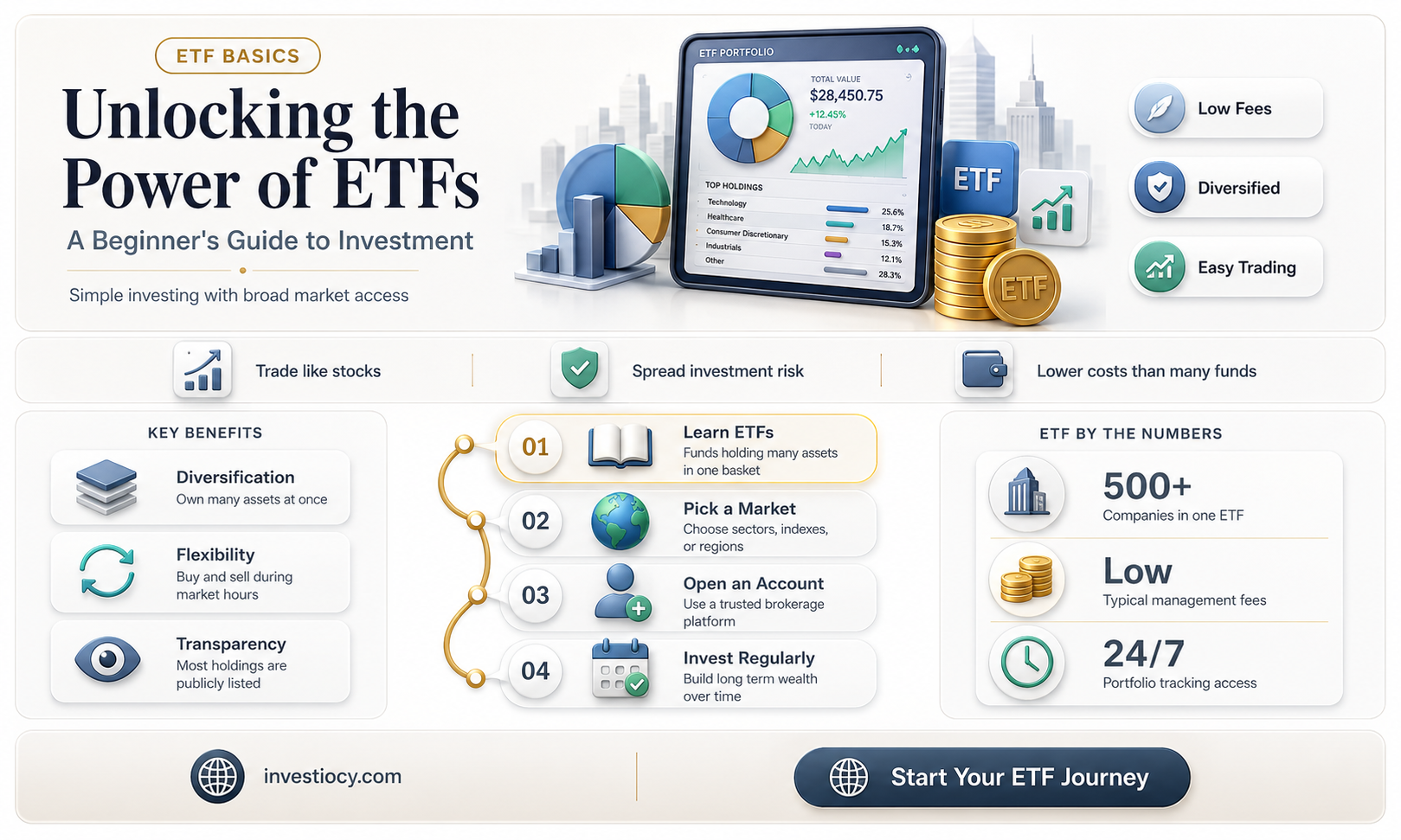
Exchange-traded funds (ETFs) are a type of investment fund that holds a collection of assets, such as stocks, bonds, or commodities, and is traded on stock exchanges. They are designed to track the performance of a specific market index or sector, providing investors with a way to diversify their portfolios and gain exposure to a broad range of assets with a single investment. ETFs are popular among investors due to their relatively low cost, ease of trading, and tax efficiency. They can be used to implement various investment strategies, from passive indexing to active management, and are suitable for both individual and institutional investors.
Explore related products



What You'll Learn
- Definition: ETFs are baskets of securities that trade on an exchange like stocks
- Types: ETFs can be categorized by asset class, such as stocks, bonds, or commodities
- Benefits: ETFs offer diversification, lower costs, and tax efficiency compared to individual stocks
- Risks: ETFs carry market risk, and some may have specific sector or credit risks
- How to Invest: Investors can buy and sell ETFs through a brokerage account or retirement plan?

Definition: ETFs are baskets of securities that trade on an exchange like stocks
ETFs, or Exchange-Traded Funds, are a type of investment fund that holds a collection of assets, such as stocks, bonds, or commodities, and trades on stock exchanges. They are designed to track the performance of a specific market index or sector, providing investors with a way to diversify their portfolios and reduce risk. ETFs are popular among investors due to their low cost, ease of trading, and tax efficiency. They can be bought and sold throughout the trading day, unlike mutual funds, which are priced once a day after the market closes.
One of the key benefits of ETFs is their ability to offer broad market exposure with a single investment. For example, an ETF that tracks the S&P 500 index would provide investors with exposure to 500 of the largest companies in the United States. This diversification can help to mitigate the risks associated with investing in individual stocks. ETFs also tend to have lower expense ratios than mutual funds, which can translate into higher returns for investors over the long term.
ETFs can be structured in a variety of ways, including physically-backed ETFs, which hold the underlying assets, and synthetically-backed ETFs, which use derivatives to replicate the performance of the underlying index. They can also be categorized by their investment strategy, such as growth, value, or dividend-focused ETFs. This variety allows investors to choose ETFs that align with their specific investment goals and risk tolerance.
When investing in ETFs, it's important to consider factors such as the fund's expense ratio, tracking error, and liquidity. The expense ratio is the annual fee charged by the fund manager, expressed as a percentage of the fund's assets. Tracking error is the difference between the fund's performance and the performance of the underlying index. Liquidity refers to the ease with which the ETF can be bought and sold, and is typically measured by the fund's average daily trading volume.
In conclusion, ETFs are a versatile and cost-effective investment option that can provide investors with broad market exposure and diversification. By understanding the different types of ETFs available and the factors to consider when investing, investors can make informed decisions that align with their investment goals and risk tolerance.
Diversify Your Portfolio: A Guide to Investing in Farmland ETFs
You may want to see also
Explore related products



Types: ETFs can be categorized by asset class, such as stocks, bonds, or commodities
ETFs, or Exchange-Traded Funds, are versatile investment vehicles that can be categorized by their underlying asset classes. These asset classes include stocks, bonds, commodities, and more specialized categories like real estate or alternative investments. Each type of ETF tracks a specific index or sector, allowing investors to gain exposure to a diversified portfolio of assets within a particular market segment.
Stock ETFs are among the most popular types, offering investors a way to invest in a broad range of equities. These can be further classified into domestic and international stock ETFs, as well as sector-specific ETFs that focus on industries such as technology, healthcare, or financials. Bond ETFs, on the other hand, invest in fixed-income securities and are categorized by factors like credit quality, maturity, and issuer type. These provide investors with a way to manage interest rate risk and achieve income generation.
Commodity ETFs invest in physical commodities like gold, oil, or agricultural products, as well as futures contracts or other derivative instruments. These ETFs offer investors a hedge against inflation and a way to diversify their portfolios away from traditional asset classes. Real estate ETFs focus on property-related investments, including real estate investment trusts (REITs) and property development companies, providing exposure to the real estate market without the need for direct property ownership.
Alternative investment ETFs encompass a wide range of non-traditional asset classes, such as private equity, hedge funds, or infrastructure investments. These ETFs offer investors access to niche markets and strategies that may not be easily accessible through other means.
When choosing an ETF, investors should consider factors like their investment goals, risk tolerance, and time horizon. It's also important to evaluate the ETF's underlying index, expense ratio, and liquidity. By understanding the different types of ETFs available, investors can construct a well-diversified portfolio that aligns with their specific financial objectives.
Diversify Your Portfolio: A Beginner's Guide to Investing in Silver ETFs
You may want to see also
Explore related products


Benefits: ETFs offer diversification, lower costs, and tax efficiency compared to individual stocks
ETFs, or Exchange-Traded Funds, have revolutionized the investment landscape by offering a unique combination of benefits that cater to both novice and seasoned investors. One of the primary advantages of ETFs is their ability to provide instant diversification. Unlike individual stocks, which require investors to select and manage a portfolio of multiple securities, ETFs are baskets of assets that are managed by professional fund managers. This diversification helps to mitigate risk by spreading investments across various sectors, industries, or geographic regions, thereby reducing the impact of any single asset's performance on the overall portfolio.
Another significant benefit of ETFs is their cost-effectiveness. ETFs typically have lower expense ratios compared to mutual funds, which can translate into substantial savings over time. This is because ETFs are passively managed, meaning they track a specific index or benchmark rather than actively trying to outperform the market. As a result, the operational costs associated with ETFs are generally lower, making them an attractive option for cost-conscious investors.
Tax efficiency is another key advantage of ETFs. When compared to individual stocks, ETFs tend to generate fewer capital gains distributions, which can help to minimize the tax burden on investors. This is particularly beneficial for those who hold their investments in taxable accounts. Additionally, ETFs can offer more favorable tax treatment in certain jurisdictions, further enhancing their appeal from a tax perspective.
In summary, ETFs offer a compelling investment solution by combining diversification, lower costs, and tax efficiency. These benefits make ETFs an attractive option for investors looking to build a well-rounded portfolio while minimizing expenses and optimizing tax outcomes. Whether used as a core holding or as part of a more complex investment strategy, ETFs have become an essential tool in the modern investor's toolkit.
Smart Investing: A Beginner's Guide to ETFs
You may want to see also
Explore related products

$53.7 $75

$64.99


Risks: ETFs carry market risk, and some may have specific sector or credit risks
ETFs, or Exchange-Traded Funds, are popular investment vehicles that offer a way to diversify one's portfolio by tracking a specific index or sector. However, like any investment, ETFs carry inherent risks that investors should be aware of before committing their capital.
One of the primary risks associated with ETFs is market risk. This is the risk that the overall market will decline, taking the value of the ETF down with it. Market risk is present in all investments to some degree, but it can be particularly pronounced in ETFs that track volatile sectors or indexes. For example, an ETF that invests in technology stocks may be more susceptible to market risk than an ETF that invests in more stable sectors like consumer goods.
In addition to market risk, some ETFs may also carry specific sector or credit risks. Sector risk refers to the risk that a particular industry or sector will underperform the broader market. For instance, an ETF that focuses on the energy sector may be at risk if oil prices decline or if there is a shift towards renewable energy sources. Credit risk, on the other hand, refers to the risk that the issuers of the securities held by the ETF will default on their debt obligations. This risk is more prevalent in ETFs that invest in high-yield or junk bonds.
Investors should also be aware of the potential for ETFs to exhibit tracking error. Tracking error occurs when the performance of the ETF deviates from the performance of the underlying index or sector it is designed to track. This can be due to a variety of factors, including the ETF's investment strategy, the composition of the underlying index, and market conditions. Tracking error can lead to investors not achieving the returns they expected, and it can also increase the overall risk of the investment.
To mitigate these risks, investors should conduct thorough research before investing in any ETF. This includes understanding the ETF's investment objective, its holdings, and its historical performance. Investors should also consider their own risk tolerance and investment goals to ensure that the ETF aligns with their overall investment strategy. Diversification is another key strategy for managing risk, as it can help to offset losses in one area with gains in another. By spreading investments across different ETFs and asset classes, investors can reduce their exposure to any single risk factor.
In conclusion, while ETFs can be a valuable addition to an investor's portfolio, it is important to be aware of the risks they carry. By understanding these risks and taking steps to manage them, investors can increase their chances of achieving their investment objectives while minimizing potential losses.
Smart Investing: A Beginner's Guide to ETFs with Fidelity
You may want to see also
Explore related products



How to Invest: Investors can buy and sell ETFs through a brokerage account or retirement plan
To invest in ETFs, the first step is to open a brokerage account or access your retirement plan. This is where you'll execute your trades. Look for a platform that offers a wide range of ETFs, low fees, and user-friendly tools for research and analysis. Once your account is set up, you'll need to fund it with cash or transfer securities from another account.
Next, identify the ETFs you're interested in. This could be based on factors like asset class, market sector, or investment strategy. Use the research tools provided by your brokerage to compare different ETFs, looking at their expense ratios, performance history, and holdings. Consider diversifying your portfolio by investing in a mix of ETFs that track different markets or asset classes.
When you're ready to make a trade, you can place a buy or sell order through your brokerage platform. You'll need to specify the ETF's ticker symbol, the number of shares you want to trade, and the type of order (market, limit, or stop). Be aware of the trading hours for the ETF's underlying exchange, as well as any potential fees or commissions associated with your trade.
It's important to monitor your ETF investments over time. Keep track of their performance, and make adjustments as needed to maintain your desired asset allocation. Consider reinvesting dividends to compound your returns, and be mindful of any capital gains taxes that may apply when you sell ETFs.
Remember, investing in ETFs involves risk, and the value of your investments can fluctuate. It's essential to have a long-term perspective and a diversified portfolio to mitigate risk. If you're unsure about how to invest in ETFs, consider consulting with a financial advisor or using a robo-advisor service for guidance.
Strategic Investing: Diversifying Your Portfolio with Lithium ETFs
You may want to see also
Frequently asked questions
An ETF, or Exchange-Traded Fund, is a type of investment fund that holds a collection of assets, such as stocks, bonds, or commodities, and is traded on stock exchanges. ETFs are designed to track the performance of a specific market index or sector, offering investors a way to diversify their portfolio and reduce risk.
ETFs and mutual funds are both investment funds, but they have some key differences. ETFs are traded on stock exchanges, allowing investors to buy and sell shares throughout the day, while mutual funds are bought and sold directly from the fund company at the end of the trading day. ETFs also tend to have lower fees and expenses than mutual funds, making them a more cost-effective option for many investors.
ETFs offer several benefits to investors, including:
- Diversification: ETFs allow investors to spread their investments across a wide range of assets, reducing the risk of any one investment.
- Low costs: ETFs typically have lower fees and expenses than mutual funds, making them a more cost-effective option.
- Flexibility: ETFs can be traded throughout the day, allowing investors to react quickly to market changes.
- Transparency: ETFs disclose their holdings daily, so investors know exactly what they own.
There are many different types of ETFs available, including:
- Index ETFs: These ETFs track the performance of a specific market index, such as the S&P 500.
- Sector ETFs: These ETFs focus on a particular sector of the economy, such as technology or healthcare.
- Bond ETFs: These ETFs invest in bonds, offering investors a way to diversify their fixed-income portfolio.
- Commodity ETFs: These ETFs invest in commodities, such as gold or oil, providing investors with exposure to these markets.


