Clark Galvan
Investment interest expense refers to the cost incurred when borrowing funds to finance investments. This type of expense is commonly associated with margin trading, where investors use borrowed money from a broker to purchase securities. The interest charged on the borrowed amount is considered an investment interest expense. It's an important concept for investors to understand, as it directly impacts the overall cost of their investment strategy and can affect their net returns.
| Characteristics | Values |
|---|---|
| Definition | Investment interest expense refers to the interest paid on borrowed funds used for investment purposes. |
| Type of Expense | It is a financial expense incurred by individuals or businesses when they borrow money to invest in assets such as stocks, bonds, or real estate. |
| Tax Treatment | In many jurisdictions, investment interest expense is tax-deductible, reducing the taxable income of the investor. |
| Formula | The formula to calculate investment interest expense is: Principal Amount x Interest Rate x Time Period. |
| Principal Amount | The initial amount borrowed for investment. |
| Interest Rate | The percentage charged by the lender for the borrowed funds. |
| Time Period | The duration for which the funds are borrowed, typically expressed in years or months. |
| Examples | An individual borrows $10,000 at a 5% interest rate for 1 year to invest in stocks, resulting in an investment interest expense of $500. |
| Importance | Understanding investment interest expense is crucial for investors to evaluate the cost-effectiveness of their investment strategies. |
| Impact on Returns | High investment interest expenses can significantly reduce the net returns from an investment, making it essential to manage borrowing costs efficiently. |
| Strategies to Reduce | Investors can reduce investment interest expense by negotiating lower interest rates, making regular principal payments, or refinancing at lower rates. |
| Related Terms | Related terms include interest expense, borrowing costs, and cost of capital. |
| Real-world Application | In real estate, investment interest expense is a common cost for property investors who finance their purchases through mortgages. |
| Economic Indicator | The level of investment interest expense can be an indicator of the economic environment, reflecting interest rates and investment activity. |
| Historical Context | Historically, periods of high interest rates have led to increased investment interest expenses, affecting investment decisions and market dynamics. |
Explore related products


What You'll Learn
- Definition: Investment interest expense is the interest paid on borrowed funds used for investments
- Calculation: It's calculated as the product of the investment interest rate and the principal amount borrowed
- Tax Implications: In many jurisdictions, investment interest expense is tax-deductible, reducing taxable income
- Impact on Cash Flow: This expense affects an investor's cash flow, as it represents a regular outflow of funds
- Strategies to Minimize: Investors may use strategies like refinancing or investing in tax-efficient vehicles to reduce this expense

Definition: Investment interest expense is the interest paid on borrowed funds used for investments
Investment interest expense is a critical concept in finance that refers to the cost incurred from borrowing funds for investment purposes. This expense is typically represented as a percentage of the borrowed amount and is paid periodically, such as monthly or annually, depending on the terms of the loan. Understanding investment interest expense is essential for investors and businesses to accurately assess the cost-effectiveness of their investment strategies.
One unique aspect of investment interest expense is its impact on the overall return on investment (ROI). When an investor borrows funds to invest, the interest paid on those funds reduces the net gain from the investment. For instance, if an investor borrows $10,000 at an interest rate of 5% per annum to invest in stocks that yield a 10% return, the net return would be 5% ($10,000 * 10% - $10,000 * 5%). This highlights the importance of considering the interest expense when evaluating investment opportunities.
Moreover, investment interest expense can be tax-deductible in certain jurisdictions, providing a potential benefit to investors. This deduction can help reduce the overall tax liability, thereby increasing the after-tax return on the investment. However, the rules and regulations regarding the deductibility of investment interest expense vary by country and even by the type of investment, making it crucial for investors to consult with tax professionals to understand the implications.
Another key consideration is the relationship between investment interest expense and the risk associated with the investment. Higher-risk investments often require higher interest rates to compensate lenders for the increased risk. This means that investors need to carefully balance the potential return with the cost of borrowing and the associated risk. For example, investing in high-yield bonds may offer a higher return, but it also comes with a higher interest expense and greater risk of default.
In conclusion, investment interest expense is a multifaceted concept that plays a significant role in investment decision-making. By understanding the intricacies of this expense, investors can make more informed choices about their investment strategies, ultimately aiming to maximize their returns while managing their costs and risks effectively.
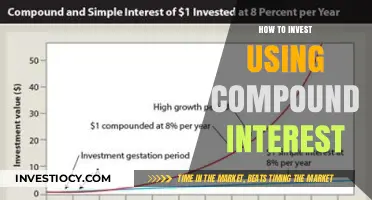
Maximize Your Returns: A Guide to Daily Compound Interest Investing
You may want to see also
Explore related products


Calculation: It's calculated as the product of the investment interest rate and the principal amount borrowed
The calculation of investment interest expense is a critical component in understanding the cost of borrowing for investment purposes. This expense is determined by multiplying the investment interest rate by the principal amount borrowed. The investment interest rate is the percentage charged by the lender for the use of their funds, while the principal amount is the initial sum borrowed. This straightforward calculation provides investors with a clear understanding of the interest costs associated with their borrowings.
For instance, if an investor borrows $10,000 at an investment interest rate of 5%, the annual interest expense would be $500. This calculation is essential for investors to assess the viability of their investment projects, as it directly impacts their cash flow and profitability. By knowing the interest expense, investors can better plan their repayments and ensure that their investments generate sufficient returns to cover the borrowing costs.
Moreover, understanding how investment interest expense is calculated can help investors make informed decisions about their borrowing options. Different lenders may offer varying interest rates, and by comparing these rates, investors can choose the most cost-effective option for their needs. Additionally, some investment projects may qualify for tax deductions on interest expenses, further reducing the overall cost of borrowing.
In summary, the calculation of investment interest expense is a fundamental aspect of investment finance. By multiplying the investment interest rate by the principal amount borrowed, investors can determine the annual cost of their borrowings, which is crucial for evaluating the financial feasibility of their investment projects and making informed borrowing decisions.
Unlocking Wealth: The Power of Compound Interest in Investing
You may want to see also
Explore related products


Tax Implications: In many jurisdictions, investment interest expense is tax-deductible, reducing taxable income
Investment interest expense can have significant tax implications, particularly in jurisdictions where it is tax-deductible. This deduction can reduce taxable income, leading to a lower tax liability for investors. However, it's crucial to understand the specific rules and limitations that apply to this deduction.
In the United States, for example, investment interest expense is deductible against taxable income, but only up to the amount of investment income earned. This means that if an investor has $10,000 in investment income and $12,000 in investment interest expense, they can only deduct $10,000 of the expense. The remaining $2,000 cannot be deducted but can be carried forward to future years.
It's also important to note that not all types of investment interest expense are deductible. Interest paid on loans used to purchase tax-exempt securities, for instance, is not deductible. Additionally, the deduction is limited to interest paid on investments held for more than one year. Short-term investments do not qualify for this deduction.
Investors should keep detailed records of their investment interest expenses, including the date the expense was incurred, the amount, and the type of investment it relates to. This documentation will be necessary to substantiate the deduction in the event of an audit.
Furthermore, the tax implications of investment interest expense can be complex, especially for investors with multiple investments and varying levels of income. Consulting with a tax professional can help ensure that investors are taking full advantage of the deductions available to them while also avoiding potential pitfalls.
In conclusion, understanding the tax implications of investment interest expense is crucial for investors looking to optimize their tax situation. By keeping accurate records and consulting with a tax professional, investors can ensure they are making the most of the deductions available to them.
Unlocking Financial Growth: The Power of Compound Interest in Investment
You may want to see also
Explore related products


Impact on Cash Flow: This expense affects an investor's cash flow, as it represents a regular outflow of funds
Investment interest expense directly impacts an investor's cash flow by necessitating regular outflows of funds. This is particularly significant for investors who rely on a steady income from their investments to cover living expenses or reinvest in other opportunities. For instance, if an investor holds a portfolio of bonds with a combined interest expense of $5,000 annually, this amount must be paid out of their cash reserves, reducing the funds available for other uses.
The effect on cash flow can be more pronounced for investors in higher tax brackets. Interest expenses on investments are generally tax-deductible, which can provide some relief. However, the reduction in taxable income may not fully offset the cash outflow, especially if the investor is in a high marginal tax rate. This can lead to a situation where the investor's after-tax cash flow is significantly lower than their gross investment income.
Moreover, the regularity of these outflows can disrupt an investor's financial planning. Unlike some other investment-related expenses, such as capital gains taxes, which are typically paid only when an asset is sold, interest expenses are usually incurred annually or semi-annually. This predictability can make it easier to budget for these costs, but it also means that the investor must consistently allocate funds to cover these expenses, which can limit their flexibility in managing their overall financial situation.
Investors should also consider the opportunity cost of these cash outflows. The funds used to pay investment interest expenses could otherwise be invested in other assets, potentially generating additional returns. This is especially relevant in a low-interest-rate environment, where the opportunity cost of tying up funds in interest-bearing investments may outweigh the benefits of the interest income.
To mitigate the impact on cash flow, investors may explore strategies such as investing in tax-efficient vehicles like municipal bonds or utilizing tax-loss harvesting to offset gains and reduce taxable income. Additionally, diversifying the investment portfolio to include a mix of income-generating and growth-oriented assets can help balance the cash inflows and outflows, ensuring a more stable financial position.
Unlocking Tax Benefits: The Deductibility of Investment Interest Expense
You may want to see also
Explore related products



$8.73 $19.99


Strategies to Minimize: Investors may use strategies like refinancing or investing in tax-efficient vehicles to reduce this expense
Investors seeking to minimize their investment interest expense have several strategies at their disposal. Refinancing existing investments or loans can be a viable option, especially in a low-interest-rate environment. By refinancing, investors can potentially secure a lower interest rate, thereby reducing the overall cost of borrowing. This strategy is particularly effective for those with adjustable-rate loans or investments, as it allows them to lock in a fixed rate and avoid future interest rate hikes.
Another approach to minimizing investment interest expense is to invest in tax-efficient vehicles. These include investment options that offer tax advantages, such as tax-deferred retirement accounts (e.g., 401(k)s, IRAs) or tax-free municipal bonds. By investing in these vehicles, investors can reduce their taxable income, which in turn lowers their tax liability and frees up more funds for investment. Additionally, tax-efficient investments can help investors avoid paying taxes on capital gains or dividends, further reducing their overall investment interest expense.
Investors may also consider diversifying their portfolios to minimize investment interest expense. By spreading investments across different asset classes, such as stocks, bonds, and real estate, investors can reduce their exposure to any single investment and potentially lower their overall interest expense. This strategy is particularly effective for those with a high-interest-rate investment, as it allows them to balance out the higher costs with lower-interest-rate investments.
Furthermore, investors can explore alternative investment options that offer lower interest rates or more favorable terms. For example, peer-to-peer lending platforms or crowdfunding sites may provide investors with access to lower-interest-rate loans or investments. Similarly, investors may consider investing in index funds or exchange-traded funds (ETFs), which typically have lower expense ratios than actively managed funds.
Finally, investors should regularly review and rebalance their portfolios to ensure that they are still aligned with their investment goals and risk tolerance. By doing so, they can identify opportunities to minimize their investment interest expense and make adjustments as needed. This may involve selling high-interest-rate investments and replacing them with lower-interest-rate options or reallocating funds to more tax-efficient vehicles.
In conclusion, minimizing investment interest expense requires a multifaceted approach that involves refinancing, investing in tax-efficient vehicles, diversifying portfolios, exploring alternative investment options, and regularly reviewing and rebalancing investments. By implementing these strategies, investors can potentially reduce their overall investment interest expense and improve their long-term financial outcomes.
Smart Investing: How to Live Off Interest and Build Wealth
You may want to see also