Laila Keith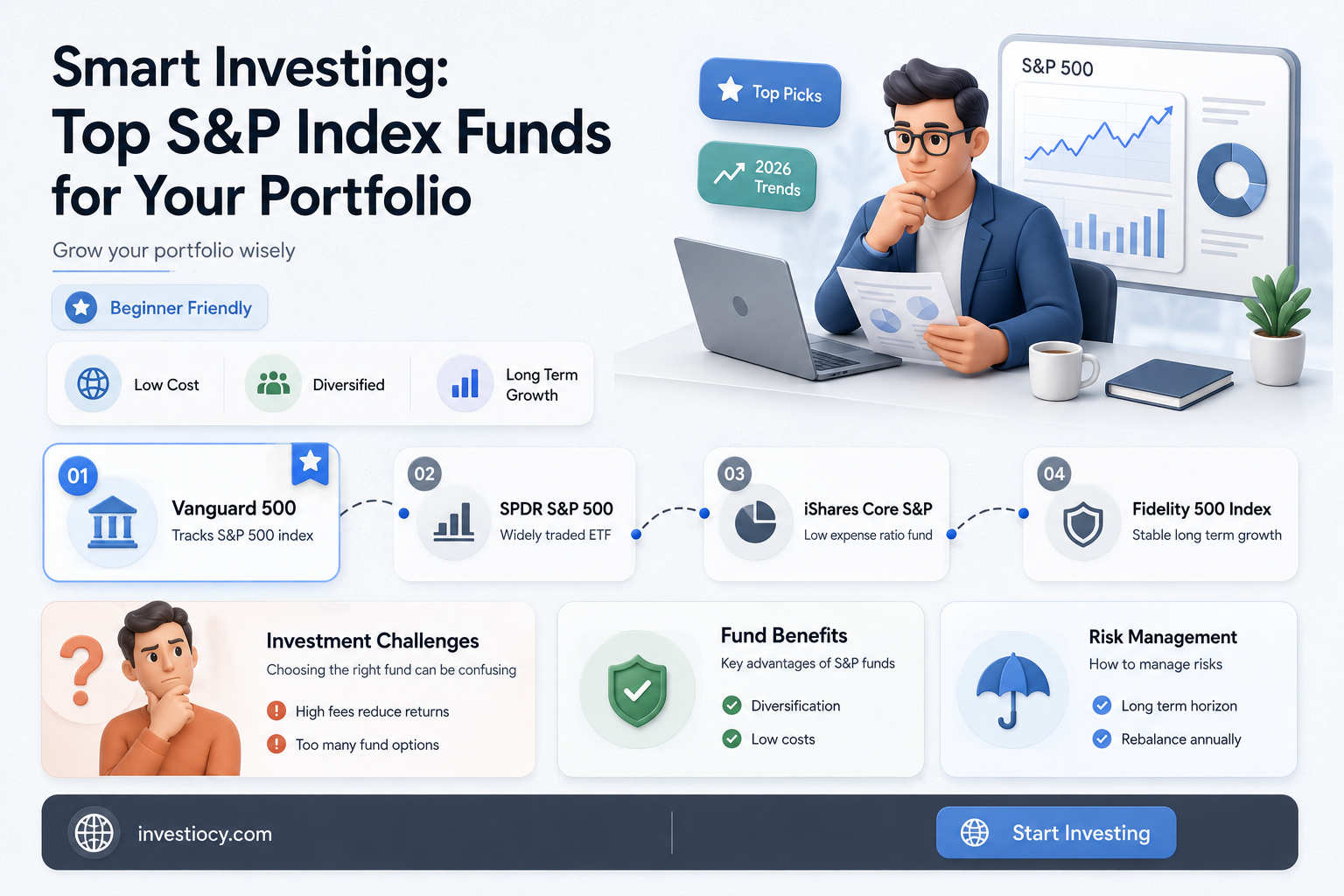
Investing in an S&P index fund can be a strategic move for those looking to diversify their portfolio and capitalize on the performance of the broader market. With numerous options available, selecting the right S&P index fund requires careful consideration of factors such as expense ratios, fund size, and historical performance. In this guide, we'll explore the key aspects to consider when choosing an S&P index fund, helping you make an informed decision that aligns with your investment goals and risk tolerance.
Explore related products


What You'll Learn
- Understanding S&P Index Funds: Overview of S&P index funds, their structure, and how they track the S&P 500
- Benefits of Investing in S&P Index Funds: Advantages such as diversification, low costs, and historical performance
- Types of S&P Index Funds: Different categories like total market, large-cap, mid-cap, and sector-specific funds
- How to Choose the Right S&P Index Fund: Factors to consider including investment goals, risk tolerance, and fund fees?
- Getting Started with S&P Index Fund Investment: Steps to begin investing, including opening a brokerage account and making the first investment

Understanding S&P Index Funds: Overview of S&P index funds, their structure, and how they track the S&P 500
S&P index funds are a type of mutual fund or exchange-traded fund (ETF) designed to track the performance of the S&P 500 index. The S&P 500 is a widely followed benchmark that represents the market capitalization of 500 large-cap companies listed on stock exchanges in the United States. By investing in an S&P index fund, investors can gain exposure to a diversified portfolio of these companies, which can help mitigate risk and provide long-term growth potential.
The structure of S&P index funds is relatively straightforward. These funds hold a collection of stocks that mirror the composition of the S&P 500 index. The fund manager or investment team is responsible for selecting the stocks and managing the portfolio to ensure it remains aligned with the index. This typically involves a passive investment approach, where the fund manager does not actively try to beat the market but instead focuses on replicating the index's performance.
One of the key benefits of S&P index funds is their low cost. Because these funds do not require active management, they tend to have lower expense ratios compared to actively managed funds. This can result in higher net returns for investors over the long term. Additionally, S&P index funds offer a high degree of liquidity, as they can be easily bought and sold on stock exchanges, making them a convenient investment option for both individual and institutional investors.
When evaluating S&P index funds, it's important to consider factors such as the fund's expense ratio, tracking error, and investment minimum. The expense ratio is the annual fee charged by the fund manager, expressed as a percentage of the fund's assets. Tracking error refers to the difference between the fund's performance and the performance of the S&P 500 index. A lower tracking error indicates that the fund is more closely aligned with the index. Finally, the investment minimum is the amount of money required to open an account in the fund.
In conclusion, S&P index funds provide a cost-effective and efficient way for investors to gain exposure to the S&P 500 index. By understanding the structure and performance characteristics of these funds, investors can make informed decisions about whether they are a suitable addition to their investment portfolio.
Smart Investing: Mutual Funds and Your Savings Allocation
You may want to see also
Explore related products


Benefits of Investing in S&P Index Funds: Advantages such as diversification, low costs, and historical performance
Investing in S&P index funds offers several key benefits that make them an attractive option for both novice and experienced investors. One of the primary advantages is diversification. By investing in an S&P index fund, you gain exposure to a broad range of companies across various sectors, which helps to mitigate the risk associated with any single stock. This diversification can lead to more stable returns over the long term, as the performance of different companies and sectors can offset each other during market fluctuations.
Another significant benefit of S&P index funds is their low cost structure. These funds typically have lower expense ratios compared to actively managed funds, which means that a smaller portion of your investment is eaten away by fees. Over time, these lower costs can compound and result in higher net returns. Additionally, S&P index funds often have no minimum investment requirements and offer fractional shares, making them accessible to investors with limited capital.
Historical performance is also a compelling reason to consider S&P index funds. The S&P 500 index, which these funds track, has a strong track record of growth over the long term. While past performance is not a guarantee of future results, the historical data suggests that investing in a diversified portfolio of large-cap U.S. companies can be a prudent strategy for achieving long-term financial goals.
Furthermore, S&P index funds offer tax efficiency. Due to their passive management style, these funds tend to have lower turnover rates, which means that they generate fewer capital gains distributions. This can be particularly advantageous for investors in higher tax brackets, as it allows them to defer taxes on gains until they sell their shares.
In conclusion, the benefits of investing in S&P index funds include diversification, low costs, historical performance, and tax efficiency. These advantages make S&P index funds a popular choice for investors looking to build a solid foundation for their portfolios. However, it's important to note that while these funds can be a good fit for many investors, they may not be suitable for everyone. It's always recommended to conduct thorough research and consider your individual financial goals and risk tolerance before making any investment decisions.
Unlocking Impact: Private Equity's New Frontier in Sustainable Investments
You may want to see also
Explore related products




Types of S&P Index Funds: Different categories like total market, large-cap, mid-cap, and sector-specific funds
The S&P 500 index is a benchmark for the U.S. stock market, and investing in it can be done through various types of index funds. These funds are categorized based on their market capitalization, sector focus, and investment strategy. Understanding the different types of S&P index funds is crucial for investors looking to diversify their portfolios and achieve specific investment goals.
One of the primary categorizations of S&P index funds is based on market capitalization. Large-cap funds focus on companies with a market capitalization of $10 billion or more, offering stability and lower volatility. Mid-cap funds, on the other hand, invest in companies with a market capitalization between $2 billion and $10 billion, providing a balance between growth potential and risk. Small-cap funds target companies with a market capitalization below $2 billion, which can offer higher growth potential but also come with increased risk.
Sector-specific S&P index funds allow investors to target specific industries or sectors within the broader market. For example, technology, healthcare, and financial sector funds are popular choices for investors looking to capitalize on the growth potential of these industries. These funds can be a good option for investors who have a strong conviction about the performance of a particular sector.
Another type of S&P index fund is the total market fund, which aims to track the performance of the entire U.S. stock market. These funds provide broad diversification and are a good option for investors looking for a low-risk, long-term investment. Total market funds typically have lower fees than sector-specific or market capitalization-focused funds.
Investors should consider their risk tolerance, investment goals, and time horizon when choosing an S&P index fund. For example, a young investor with a high risk tolerance may opt for a small-cap or sector-specific fund, while an older investor looking for stability may prefer a large-cap or total market fund. It's also important to consider the fund's expense ratio, as lower fees can lead to higher returns over time.
In conclusion, the different types of S&P index funds offer investors a range of options to suit their investment needs and goals. By understanding the characteristics of each type of fund, investors can make informed decisions about which funds to include in their portfolios.
Decoding the DNA of Investment Fund Managers: Traits That Drive Success
You may want to see also
Explore related products


How to Choose the Right S&P Index Fund: Factors to consider including investment goals, risk tolerance, and fund fees
To choose the right S&P index fund, it's crucial to align your investment goals with the fund's objectives. If you're investing for retirement, you may want to consider a fund that tracks the S&P 500, as it offers broad market exposure and historically strong returns over the long term. However, if you're saving for a shorter-term goal, such as a down payment on a house, a fund with a shorter duration or lower volatility might be more appropriate.
Risk tolerance is another key factor to consider. If you're comfortable with market fluctuations and have a higher risk tolerance, you might opt for a fund that tracks the S&P 500 Growth Index, which focuses on companies with strong growth potential but may come with higher volatility. Conversely, if you're more risk-averse, a fund that tracks the S&P 500 Value Index, which includes companies with lower price-to-earnings ratios, might be a better fit.
Fund fees are an essential consideration, as they can significantly impact your returns over time. Look for funds with low expense ratios, ideally below 0.20%. Vanguard and BlackRock are known for offering competitive fees, but it's essential to compare costs across different fund providers to find the best option for your needs.
When evaluating S&P index funds, it's also important to consider the fund's size and liquidity. Larger funds tend to have more resources and lower trading costs, while smaller funds might be more agile and able to capitalize on market inefficiencies. Additionally, consider the fund's tracking error, which measures how closely the fund's performance matches the underlying index. A lower tracking error indicates that the fund is doing a better job of replicating the index's returns.
Finally, don't overlook the importance of diversification. While S&P index funds provide broad market exposure, it's still essential to spread your investments across different asset classes, such as bonds and international stocks, to minimize risk and maximize returns. By carefully considering these factors, you can choose an S&P index fund that aligns with your investment goals and helps you achieve financial success.
Strategic Bond Fund Investment: Finding Your Ideal Allocation Percentage
You may want to see also
Explore related products

Getting Started with S&P Index Fund Investment: Steps to begin investing, including opening a brokerage account and making the first investment
To begin investing in an S&P index fund, the first step is to open a brokerage account. This can be done online through various platforms such as Fidelity, Vanguard, or Charles Schwab. The process typically requires personal information, identification, and bank account details to link for funding. Once the account is opened and verified, the investor can proceed to fund the account via bank transfer, wire transfer, or electronic transfer from another brokerage account.
After funding the brokerage account, the next step is to select the appropriate S&P index fund. Investors should look for funds with low expense ratios and a strong track record of performance. Some popular options include the Vanguard S&P 500 Index Fund (VFIAX) and the Fidelity S&P 500 Index Fund (FSMAX). It's important to review the fund's prospectus and understand its investment objectives, risks, and fees before making a decision.
Once the fund is selected, the investor can place a buy order through the brokerage platform. This can be done by searching for the fund's ticker symbol, entering the desired investment amount, and selecting the appropriate order type (e.g., market order or limit order). After the order is executed, the investor will own shares in the S&P index fund and can monitor its performance through the brokerage account.
It's crucial for new investors to understand the risks associated with investing in the stock market, including market volatility and the potential for losses. Diversification and a long-term investment horizon can help mitigate these risks. Additionally, investors should consider setting up regular contributions to their S&P index fund investment to take advantage of dollar-cost averaging and compound interest.
In summary, getting started with S&P index fund investment involves opening a brokerage account, funding the account, selecting a suitable fund, placing a buy order, and monitoring the investment. By following these steps and understanding the associated risks, new investors can begin building a diversified portfolio and working towards their financial goals.
Smart Investing: Index Funds' Optimal Allocation in Your Portfolio
You may want to see also
Frequently asked questions
The S&P 500 Index fund tracks the performance of the 500 largest companies listed on stock exchanges in the United States, representing about 80% of the U.S. stock market's value. In contrast, the S&P Total Market Index fund includes nearly all publicly traded U.S. companies, offering broader market exposure.
Choosing between an S&P Index fund and an actively managed fund depends on your investment strategy and goals. Index funds typically have lower fees and are designed to match the market's performance, making them suitable for long-term, passive investors. Actively managed funds, on the other hand, aim to outperform the market through professional management but often come with higher fees and may not consistently beat the market.
To select the right S&P Index fund, consider your risk tolerance, investment horizon, and financial goals. For example, if you're looking for broad market exposure and have a long-term investment horizon, the S&P 500 or S&P Total Market Index funds might be appropriate. If you're more risk-averse or have specific sector interests, you might consider sector-specific S&P Index funds or those with a focus on dividend-paying stocks.