Inaya Mclaughlin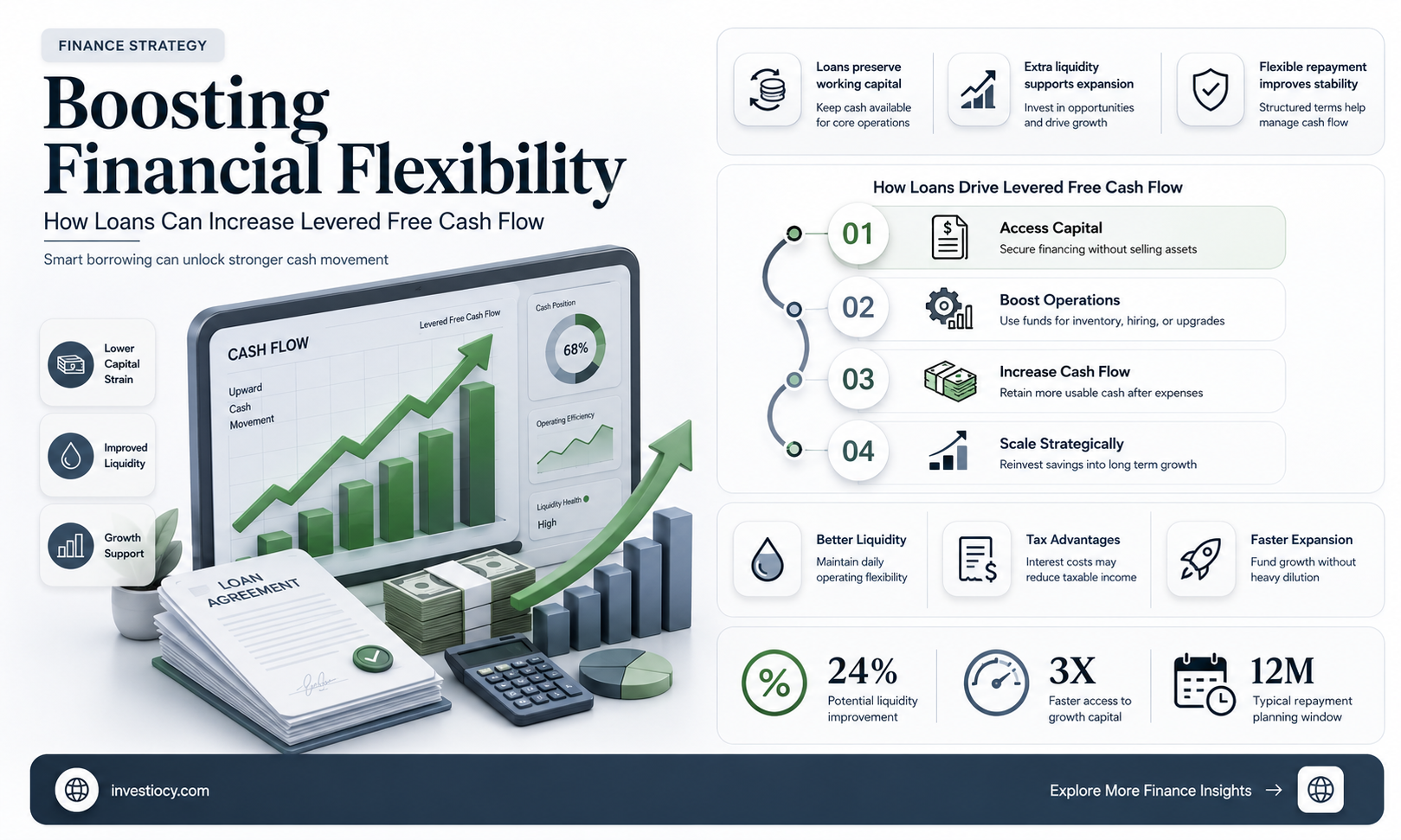
The question of whether taking a loan increases levered free cash flow is a crucial one in financial analysis. Levered free cash flow (FCF) represents the cash available to a company after accounting for its operating expenses, capital expenditures, and debt obligations. When a company takes on debt, such as through a loan, it can impact its FCF in several ways. On one hand, the loan proceeds can provide an immediate influx of cash, potentially increasing FCF in the short term. However, the company must also consider the interest payments and principal repayments associated with the loan, which can reduce FCF over time. Additionally, the loan may affect the company's credit rating and borrowing costs, further influencing its FCF. Therefore, the impact of taking a loan on levered FCF depends on various factors, including the loan terms, the company's financial health, and its ability to generate sufficient cash flows to service the debt.
Explore related products



What You'll Learn
- Definition of Levered Free Cash Flow: Understanding the concept and its components
- Impact of Debt on Cash Flow: How taking a loan affects operating and financing cash flows
- Interest Expense and Cash Flow: The relationship between loan interest and free cash flow
- Debt Repayment and Cash Flow: How paying back loans influences levered free cash flow
- Leverage and Financial Risk: Assessing the risk associated with increased leverage from loans

Definition of Levered Free Cash Flow: Understanding the concept and its components
Levered Free Cash Flow (LFCF) is a financial metric that represents the cash available to a company after accounting for its operating expenses, capital expenditures, and debt obligations. It is a crucial indicator of a company's financial health and its ability to generate value for shareholders. The calculation of LFCF involves several key components, including net income, depreciation and amortization, changes in working capital, capital expenditures, and interest expenses.
Net income is the starting point for calculating LFCF. It represents the company's profit after taxes. Depreciation and amortization are non-cash charges that reduce the value of tangible and intangible assets, respectively. These amounts are added back to the net income because they do not represent actual cash outflows. Changes in working capital, such as increases or decreases in accounts receivable, inventory, and accounts payable, are also accounted for in the calculation. These changes can have a significant impact on a company's cash flow.
Capital expenditures, which include investments in property, plant, and equipment, are subtracted from the calculation because they represent cash outflows. Interest expenses, which are the costs associated with borrowing money, are also subtracted. However, the impact of interest expenses on LFCF can be mitigated by the tax shield benefit, which is the reduction in taxes due to the deduction of interest expenses.
Understanding the components of LFCF is essential for analyzing a company's financial performance. It allows investors and analysts to assess the company's ability to generate cash and meet its financial obligations. Additionally, LFCF can be used to evaluate the effectiveness of a company's capital allocation decisions and its overall financial strategy.
Understanding Loans: Impact on Assets and Liabilities
You may want to see also
Explore related products





Impact of Debt on Cash Flow: How taking a loan affects operating and financing cash flows
Taking a loan can have a significant impact on a company's cash flow, particularly when it comes to operating and financing activities. When a company borrows money, it receives a lump sum of cash that can be used for various purposes, such as investing in new equipment, expanding operations, or paying off existing debts. However, this influx of cash is not without its consequences.
The most immediate effect of taking a loan is on the company's financing cash flow. The loan agreement will specify regular interest payments and a schedule for repaying the principal amount. These payments will reduce the company's available cash, potentially impacting its ability to fund other activities. For example, if a company takes out a loan with high interest rates, it may struggle to make the required payments while also investing in growth opportunities.
In addition to the direct impact on financing cash flow, taking a loan can also affect a company's operating cash flow. This is because the loan may be used to fund operational expenses, such as payroll or inventory. While this can provide a short-term boost to operating cash flow, it may also lead to a cycle of debt where the company relies on loans to cover ongoing expenses. This can be particularly problematic if the company's revenue is not sufficient to cover the loan payments and other operational costs.
One key consideration when evaluating the impact of debt on cash flow is the concept of levered free cash flow. This metric takes into account the company's operating cash flow, capital expenditures, and debt obligations to provide a more comprehensive view of its financial health. By analyzing levered free cash flow, investors and analysts can better understand how a company's debt levels are affecting its overall cash generation capabilities.
In conclusion, taking a loan can have both positive and negative effects on a company's cash flow. While it can provide a much-needed source of funding, it also introduces new financial obligations that can impact the company's ability to generate cash. By carefully considering the terms of the loan and its potential impact on operating and financing cash flows, companies can make informed decisions about whether borrowing is the right strategy for their financial situation.
Understanding 401(k) Loans: Do They Count as Withdrawals?
You may want to see also
Explore related products


Interest Expense and Cash Flow: The relationship between loan interest and free cash flow
The relationship between interest expense and cash flow is a critical aspect of financial management, particularly when considering the impact of loans on a company's financial health. Interest expense represents the cost of borrowing money, which is typically deducted from a company's earnings before interest and taxes (EBIT) to arrive at its net income. On the other hand, cash flow refers to the movement of cash into and out of a business, which is essential for meeting financial obligations, investing in growth opportunities, and returning value to shareholders.
When a company takes on a loan, the interest payments associated with that loan can have a significant impact on its cash flow. In the short term, the interest expense may reduce the amount of cash available for other uses, such as investing in new projects or paying off other debts. However, if the loan is used to finance a project that generates additional revenue, the increased cash inflow may offset the interest expense and ultimately lead to an increase in free cash flow.
Free cash flow (FCF) is a measure of a company's ability to generate cash from its operations, minus the cash required for capital expenditures. It is an important indicator of a company's financial flexibility and its ability to create value for shareholders. When evaluating the impact of a loan on FCF, it is essential to consider the loan's interest rate, repayment terms, and the expected return on investment from the project being financed.
In some cases, taking on a loan can increase levered free cash flow, which is the FCF available to all capital providers, including debt holders and equity holders. This can occur when the loan is used to finance a high-return project that generates sufficient cash to cover the interest payments and still leave excess cash available for distribution. However, it is crucial to note that this scenario depends on the specific circumstances of the loan and the project being financed.
To illustrate this concept, consider a company that takes on a $1 million loan with an annual interest rate of 5% to finance a new marketing campaign. If the campaign generates an additional $200,000 in revenue, the company's EBIT may increase by $150,000 (assuming a 75% profit margin). However, the interest expense on the loan would be $50,000 per year, reducing the net income by that amount. Depending on the company's capital expenditure requirements, the loan may or may not lead to an increase in FCF.
In conclusion, the relationship between interest expense and cash flow is complex and depends on various factors, including the loan's terms, the project being financed, and the company's overall financial situation. While taking on a loan can potentially increase levered free cash flow, it is essential to carefully evaluate the expected return on investment and the impact on the company's cash flow to ensure that the loan is a prudent financial decision.
Boosting Your Credit Score: The Strategic Use of Loans
You may want to see also
Explore related products

$6.37 $6.37

$17.73 $14.88



Debt Repayment and Cash Flow: How paying back loans influences levered free cash flow
The relationship between debt repayment and cash flow is a critical aspect of financial management for businesses. When a company takes on debt, it typically does so to finance operations, investments, or other strategic initiatives. However, the process of paying back these loans can have a significant impact on the company's levered free cash flow. Levered free cash flow is a measure of a company's financial performance, calculated by subtracting interest payments and tax obligations from its operating cash flow.
As a company begins to repay its loans, the interest payments decrease over time, which can lead to an increase in levered free cash flow. This is because the reduction in interest expenses frees up more cash for other uses, such as reinvestment in the business or distribution to shareholders. However, the principal payments on the debt can also reduce the available cash, potentially offsetting the benefits of lower interest payments.
The impact of debt repayment on levered free cash flow can be further complicated by the company's tax situation. Interest payments on debt are often tax-deductible, which can reduce the company's tax liability and increase its after-tax cash flow. However, as the debt is paid down, the tax shield provided by the interest payments diminishes, which can lead to higher tax obligations and lower levered free cash flow.
In addition to these factors, the timing of debt repayment can also affect levered free cash flow. If a company repays its debt too quickly, it may miss out on opportunities to invest in growth initiatives or take advantage of low interest rates. On the other hand, if debt repayment is delayed, the company may face higher interest costs and potential credit rating downgrades, which can negatively impact its cash flow.
To optimize the relationship between debt repayment and levered free cash flow, companies must carefully consider their financial situation and develop a comprehensive debt management strategy. This may involve prioritizing high-interest debt for repayment, negotiating favorable terms with lenders, and balancing debt repayment with other financial goals, such as investment in growth initiatives or returning value to shareholders.
In conclusion, the process of paying back loans can have a complex and multifaceted impact on a company's levered free cash flow. By understanding the interplay between interest payments, principal repayments, tax obligations, and investment opportunities, companies can develop effective debt management strategies that maximize their financial performance and support long-term growth.
The Impact of Loans on Your Net Worth: A Comprehensive Guide
You may want to see also
Explore related products


Leverage and Financial Risk: Assessing the risk associated with increased leverage from loans
Increased leverage from loans can significantly amplify financial risk for individuals and businesses alike. When an entity takes on more debt, its financial leverage increases, meaning that a smaller change in the value of its assets can lead to a larger change in the value of its equity. This heightened sensitivity to asset value fluctuations can be particularly perilous during economic downturns or periods of market volatility. For instance, if a company has a high level of debt and experiences a decline in sales, its ability to meet debt obligations may be severely impaired, potentially leading to bankruptcy.
Assessing the risk associated with increased leverage involves a careful examination of several factors. One key consideration is the debt-to-equity ratio, which compares the total amount of debt to the total amount of equity. A higher debt-to-equity ratio indicates greater financial leverage and, consequently, higher risk. Another important factor is the interest rate on the debt, as higher interest rates can increase the cost of borrowing and make it more difficult to service the debt. Additionally, the term of the loan and the presence of any collateral or guarantees can also impact the level of risk.
In the context of levered free cash flow, increased leverage can have a complex effect. On one hand, higher debt levels can lead to higher interest expenses, which can reduce free cash flow. On the other hand, if the borrowed funds are used to invest in projects with high returns, the increase in revenue can more than offset the higher interest costs, leading to an increase in levered free cash flow. However, this scenario assumes that the investments are successful and that the entity can manage the increased debt burden effectively.
To mitigate the risks associated with increased leverage, it is essential to have a robust financial plan in place. This plan should include a detailed analysis of the entity's cash flow, debt obligations, and investment opportunities. It should also consider potential risks and develop strategies to address them, such as maintaining a reserve fund or diversifying investments. Furthermore, entities should regularly review and adjust their financial plans to ensure that they remain aligned with their long-term goals and risk tolerance.
In conclusion, while increased leverage from loans can potentially lead to higher returns and increased levered free cash flow, it also carries significant financial risks. Careful assessment and management of these risks are crucial to avoid financial distress and ensure long-term stability. Entities should approach leverage with caution, using it as a tool to enhance their financial position rather than as a means to overleverage and expose themselves to undue risk.
Understanding the Impact of Loans on Life Insurance Premiums
You may want to see also
Frequently asked questions
Yes, taking a loan can increase levered free cash flow. Levered free cash flow represents the cash available to a company after accounting for its financial obligations, such as debt repayments and interest expenses. When a company takes a loan, it increases its debt, which in turn can increase the amount of cash available for other uses, thereby boosting levered free cash flow.
The interest rate on a loan directly impacts levered free cash flow. A higher interest rate means the company will have to pay more in interest expenses, which reduces the amount of cash available for other purposes. Conversely, a lower interest rate can lead to lower interest expenses, thereby increasing levered free cash flow.
Using loans to increase levered free cash flow comes with several risks. Firstly, there is the risk of over-leveraging, where a company takes on too much debt and struggles to meet its repayment obligations. This can lead to financial distress and even bankruptcy. Secondly, interest rates can fluctuate, which can affect the company's ability to manage its debt and cash flow. Lastly, relying heavily on debt can limit a company's flexibility in responding to changes in the market or economy.
There are several alternative ways to increase levered free cash flow without taking a loan. One approach is to improve operational efficiency by reducing costs and increasing revenue. Another strategy is to optimize working capital management, such as by accelerating accounts receivable collection and delaying accounts payable payments. Additionally, companies can consider equity financing, where they raise capital by issuing shares, which does not increase debt and can provide a more stable source of funding.