Lester Freeman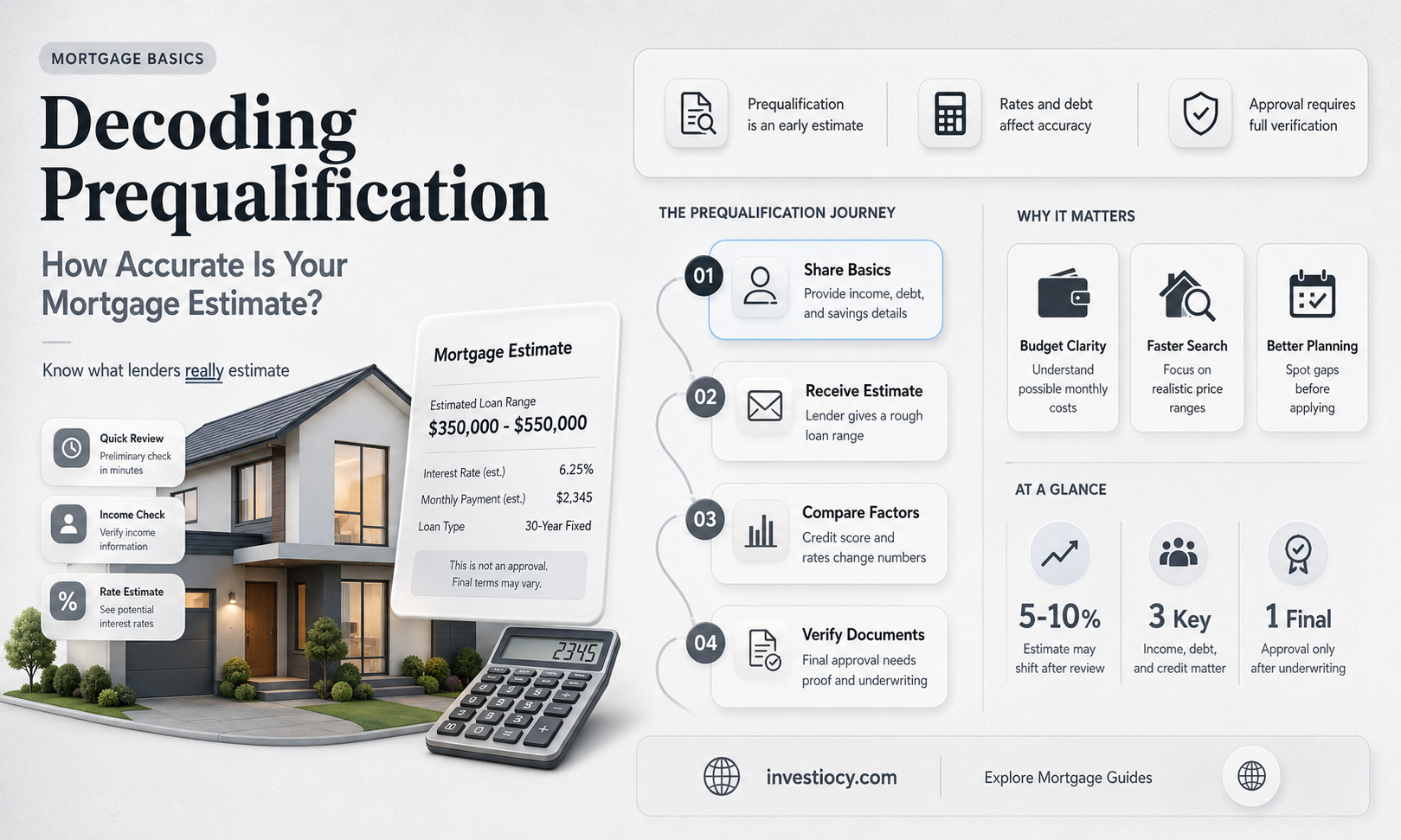
Prequalification mortgages are an essential step in the homebuying process, providing potential buyers with an estimate of how much they can borrow. However, the accuracy of these prequalifications can vary significantly depending on several factors. Lenders typically base prequalification on self-reported financial information, which may not always be entirely accurate or up-to-date. Additionally, credit scores and debt-to-income ratios play a crucial role in determining the loan amount, and any changes in these factors can impact the prequalification. It's also important to note that prequalification is not a guarantee of loan approval, as it is a preliminary assessment. For a more accurate picture, buyers should consider getting preapproved, which involves a more thorough review of their financial situation. Ultimately, the accuracy of a prequalification mortgage is a starting point that can help buyers understand their borrowing potential, but it should be approached with the understanding that it is an estimate rather than a definitive figure.
| Characteristics | Values |
|---|---|
| Definition | Prequalification mortgage refers to the process of determining how much mortgage a borrower can afford before applying for a loan. |
| Purpose | It helps borrowers understand their budget and lenders assess the borrower's creditworthiness. |
| Accuracy Level | Generally high, but subject to the quality of information provided by the borrower. |
| Factors Considered | Income, credit score, debt, employment history, and other financial obligations. |
| Method of Calculation | Lenders use specific formulas and algorithms to calculate the mortgage amount. |
| Time Frame | Usually takes a few minutes to a few hours for an online prequalification. |
| Cost | Often free, but some lenders may charge a fee. |
| Impact on Credit Score | Typically does not affect the credit score as it's a soft inquiry. |
| Legal Requirements | Lenders must comply with fair lending laws and regulations. |
| Alternatives | Borrowers can also opt for pre-approval, which is a more formal process. |
| Benefits | Helps borrowers avoid applying for mortgages they can't afford, saving time and effort. |
| Drawbacks | Not a guarantee of loan approval; actual approval may depend on additional factors. |
| Misconceptions | Some borrowers may overestimate their affordability based on prequalification results. |
| Industry Standards | Lenders follow industry-standard practices and guidelines for prequalification. |
| Technological Advancements | Online prequalification tools have made the process more accessible and user-friendly. |
| Future Trends | Increased use of AI and machine learning to improve accuracy and efficiency. |
Explore related products


What You'll Learn
- Factors Affecting Accuracy: Understand how credit scores, income, and debt impact prequalification results
- Types of Prequalification: Explore the differences between hard and soft credit checks in mortgage prequalification
- Common Pitfalls: Avoid frequent mistakes that can lead to inaccurate prequalification outcomes
- Benefits of Prequalification: Discover the advantages of getting prequalified for a mortgage before house hunting
- Improving Chances: Learn strategies to enhance your financial profile and increase prequalification accuracy

Factors Affecting Accuracy: Understand how credit scores, income, and debt impact prequalification results
Credit scores play a pivotal role in determining the accuracy of mortgage prequalification results. A higher credit score generally indicates a lower risk to lenders, which can lead to more favorable prequalification outcomes. Conversely, a lower credit score may result in less accurate prequalification results, as lenders may be more cautious in their assessments. It's essential for borrowers to understand their credit scores and how they impact the prequalification process to set realistic expectations.
Income is another critical factor that affects the accuracy of prequalification results. Lenders use income to assess a borrower's ability to repay the mortgage, and a stable, sufficient income can lead to more accurate prequalification outcomes. Fluctuating or insufficient income may result in less accurate results, as lenders may be uncertain about the borrower's long-term financial stability. Borrowers should provide accurate and comprehensive income information to ensure the prequalification process is as precise as possible.
Debt levels also significantly impact the accuracy of prequalification results. High debt levels can indicate a higher risk to lenders, as borrowers may struggle to manage multiple financial obligations simultaneously. This can lead to less accurate prequalification outcomes, as lenders may be more conservative in their assessments. Conversely, lower debt levels can result in more accurate prequalification results, as borrowers appear to have a better handle on their financial situation. It's crucial for borrowers to be transparent about their debt levels to ensure the prequalification process is as accurate as possible.
In addition to these factors, it's important for borrowers to understand that prequalification results are not guarantees. They are based on the information provided by the borrower and are subject to change if additional information is uncovered during the formal application process. Borrowers should use prequalification results as a starting point for their mortgage journey, but should not rely solely on them when making financial decisions.
To improve the accuracy of prequalification results, borrowers can take several steps. They can ensure that their credit reports are accurate and up-to-date, provide comprehensive income and debt information, and be transparent about any financial obligations or concerns. By taking these steps, borrowers can help lenders make more informed decisions and increase the likelihood of accurate prequalification results.
In conclusion, understanding how credit scores, income, and debt impact prequalification results is essential for borrowers seeking a mortgage. By being aware of these factors and taking steps to improve their financial situation, borrowers can increase the accuracy of prequalification results and set themselves up for success in the mortgage application process.
Unveiling the Truth: Discover Scorecard Mortgage Accuracy Explained
You may want to see also
Explore related products


Types of Prequalification: Explore the differences between hard and soft credit checks in mortgage prequalification
In the realm of mortgage prequalification, understanding the distinction between hard and soft credit checks is crucial. A hard credit check, also known as a hard inquiry, occurs when a lender pulls your credit report to evaluate your creditworthiness. This type of check leaves a mark on your credit report and can slightly lower your credit score. On the other hand, a soft credit check, or soft inquiry, is a preliminary review of your credit report that does not impact your credit score. Lenders often use soft checks to prequalify borrowers and provide them with an estimate of the loan amount they might be eligible for.
One of the key differences between hard and soft credit checks lies in their purpose and impact. Hard credit checks are typically conducted during the formal loan application process and are used to make a final decision on whether to approve the loan. They provide a comprehensive view of the borrower's credit history, including their payment history, debt levels, and any negative marks such as bankruptcies or foreclosures. Soft credit checks, however, are more of a cursory review and are used to give borrowers an idea of their eligibility for a loan without the commitment of a formal application. They provide a snapshot of the borrower's credit profile but do not delve as deeply into their financial history.
Another important distinction is the frequency with which these checks can be performed. Hard credit checks are generally limited to a specific period, usually within 30 to 45 days, to minimize the impact on the borrower's credit score. This is because multiple hard inquiries in a short period can be seen as a sign of financial distress and can negatively affect the borrower's creditworthiness. Soft credit checks, on the other hand, can be performed more frequently without any adverse effects on the borrower's credit score. This allows borrowers to shop around for the best loan rates and terms without worrying about damaging their credit.
In terms of accuracy, hard credit checks provide a more detailed and accurate picture of a borrower's credit history. They take into account all aspects of the borrower's financial past, including their payment history, debt levels, and any negative marks. This comprehensive review allows lenders to make a more informed decision about whether to approve the loan. Soft credit checks, while less detailed, still provide a reasonably accurate estimate of a borrower's eligibility for a loan. They are based on the same credit reporting data as hard checks but do not include all the information.
In conclusion, understanding the differences between hard and soft credit checks is essential for borrowers who are considering prequalifying for a mortgage. Hard credit checks provide a more detailed and accurate assessment of a borrower's creditworthiness but can impact their credit score. Soft credit checks offer a preliminary review of a borrower's credit profile without affecting their score, allowing them to explore their loan options more freely. By knowing the distinctions between these two types of checks, borrowers can make more informed decisions about their mortgage prequalification process.
Decoding Trulia's Mortgage Estimates: How Accurate Are They Really?
You may want to see also
Explore related products


Common Pitfalls: Avoid frequent mistakes that can lead to inaccurate prequalification outcomes
One common pitfall in the mortgage prequalification process is failing to provide accurate financial information. This can include omitting debts, overestimating income, or not disclosing all assets. Such inaccuracies can lead to an overestimation of how much mortgage one can afford, resulting in potential financial strain or even loan denial later in the process. To avoid this, it's crucial to gather and provide all necessary financial documents, such as pay stubs, tax returns, and bank statements, and to be transparent about any debts or financial obligations.
Another frequent mistake is not understanding the difference between prequalification and preapproval. Prequalification is an initial assessment of how much mortgage one might qualify for, based on self-reported financial information. Preapproval, on the other hand, is a more formal process where a lender reviews verified financial documents and credit history to determine the exact loan amount and terms. Confusing these two stages can lead to unrealistic expectations and potential disappointment. It's important to recognize that prequalification is a preliminary step and that preapproval is necessary for a more accurate assessment of mortgage eligibility.
Additionally, many borrowers make the error of applying for multiple mortgages or credit lines simultaneously, which can negatively impact their credit score. Each application results in a hard credit inquiry, which can lower the credit score and potentially affect the interest rate or loan terms offered. To mitigate this, it's advisable to limit the number of applications and to apply for mortgages or credit lines only when necessary.
Lastly, failing to consider additional costs associated with homeownership, such as property taxes, homeowners insurance, and maintenance expenses, can lead to an inaccurate assessment of affordability. These costs can add up significantly and should be factored into the overall budget when determining how much mortgage one can afford. By being aware of these common pitfalls and taking steps to avoid them, borrowers can improve the accuracy of their prequalification outcomes and make more informed decisions about their mortgage options.
Unveiling the Truth: How Accurate Are Mortgage Surveys?
You may want to see also
Explore related products


Benefits of Prequalification: Discover the advantages of getting prequalified for a mortgage before house hunting
Getting prequalified for a mortgage can significantly streamline the house hunting process. By obtaining a prequalification letter, you signal to sellers that you are a serious buyer with the financial backing to follow through on an offer. This can give you a competitive edge in hot markets where multiple offers are common. Additionally, prequalification helps you understand your budget and the price range of homes you can afford, preventing you from falling in love with a property that is beyond your means.
One of the key benefits of prequalification is that it allows you to identify and address any potential issues with your credit or financial history before you start looking at homes. This proactive approach can save you time and stress down the line, as you can work on improving your credit score or resolving any discrepancies before they become a problem during the mortgage application process. Furthermore, prequalification can help you negotiate better terms with lenders, as they are more likely to offer favorable interest rates and terms to borrowers who have already taken the initiative to get prequalified.
Prequalification also provides a level of certainty and peace of mind for both buyers and sellers. For buyers, it offers a clear understanding of their purchasing power and helps them make informed decisions about which homes to pursue. For sellers, it demonstrates that the buyer is financially capable of completing the transaction, reducing the risk of deals falling through due to financing issues. This mutual benefit can lead to smoother transactions and more successful outcomes for all parties involved.
In summary, getting prequalified for a mortgage before house hunting offers numerous advantages, including increased competitiveness, better budget management, improved credit and financial health, enhanced negotiation power, and greater certainty and peace of mind for both buyers and sellers. By taking this important step, you can set yourself up for success in the home buying process and avoid potential pitfalls that could derail your dreams of homeownership.
Decoding Mortgage Estimates: How Accurate Are They Really?
You may want to see also
Explore related products



![NMLS Study Guide 2026-2027 - 5 Full-Length Practice Tests, SAFE MLO Exam Prep Secrets Book for the Mortgage Loan Originator Exam: [4th Edition]](https://m.media-amazon.com/images/I/717iHac5CwL._AC_UL320_.jpg)
Improving Chances: Learn strategies to enhance your financial profile and increase prequalification accuracy
To improve your chances of prequalification accuracy, it's crucial to understand the factors that influence your financial profile. Lenders typically consider your credit score, income, debt-to-income ratio, and employment history when determining your eligibility for a mortgage. By focusing on these key areas, you can enhance your financial profile and increase the likelihood of a successful prequalification.
One strategy to improve your financial profile is to maintain a good credit score. This can be achieved by making timely payments on your debts, keeping your credit utilization low, and avoiding new credit inquiries. Additionally, it's essential to have a stable income and a low debt-to-income ratio. This means that your monthly debt payments should not exceed a certain percentage of your gross monthly income. Lenders typically prefer a debt-to-income ratio of 36% or less.
Another important factor is your employment history. Lenders like to see that you have a steady job and a consistent income. If you've recently changed jobs or have gaps in your employment history, it may be more challenging to get prequalified for a mortgage. However, if you can provide documentation of your income and employment history, it can help strengthen your application.
It's also important to be aware of common mistakes that can negatively impact your prequalification accuracy. For example, applying for multiple credit cards or loans in a short period can lower your credit score and raise red flags for lenders. Additionally, failing to provide accurate or complete information on your application can lead to delays or even rejection.
To increase your chances of prequalification accuracy, it's a good idea to work with a mortgage lender who can guide you through the process and provide personalized advice. They can help you identify areas where you can improve your financial profile and provide tips on how to strengthen your application. By taking these steps and being proactive about your financial profile, you can increase your chances of a successful prequalification and ultimately, securing the mortgage you need.
Decoding Mortgage Scores: How Accurate is MyFICO?
You may want to see also
Frequently asked questions
A prequalification mortgage estimate is generally based on the information you provide to the lender and is subject to change. It's an initial assessment to give you an idea of how much you might be able to borrow, but it's not a guarantee of loan approval or the final loan amount.
Several factors can influence the accuracy of a prequalification mortgage, including changes in your credit score, income, debt levels, and interest rates. Additionally, the lender's underwriting criteria and the type of loan you're applying for can also impact the final loan amount.
No, a prequalification mortgage is not binding. It's a non-binding estimate that provides you with an idea of your borrowing potential. You're not obligated to proceed with the loan, and the lender is not obligated to offer you the loan.
To improve the accuracy of your prequalification mortgage, you can provide the lender with more detailed and accurate information about your financial situation. This includes your income, debt, credit score, and employment history. Additionally, you can work with the lender to understand their underwriting criteria and how it might affect your loan eligibility.